Cosmic Conservative

Rational Conservatism from the heart of America

Oddball

Greppling

By CosmicConservative
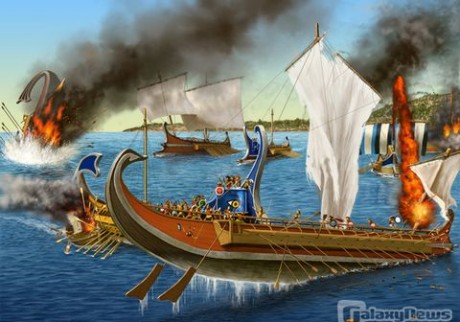
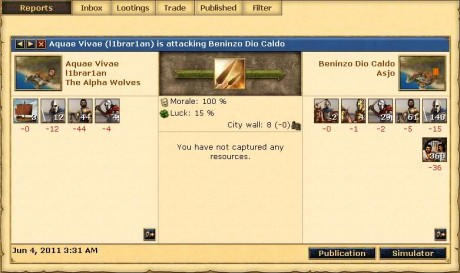
Hi, my name is Cosmic and I have been a Grepolis addict. grepolis What is Grepolis? It's an online wargame that is (very, very) loosely based on ancient Greek warfare. The name appears to be a portmanteau of the English word "Greek" and the Greek word "polis" meaning "city-state." First of all, it is only fair to point out that the ads you may have seen on TV imply that the game looks something like this: grepolis ad It doesn't. The most action you will see on the screen in the game looks like this: actual grepolis battle There is no interactive, simulationist graphics element to the game at all, unless you consider a static image of your city being built, all exactly the same, to be so. I don't. But that doesn't mean the game isn't addictive. The basic premise of the game is that you are some sort of king in the Grepolis world, and as such you reign over a city or cities. Following the rules of the game properly every player begins as the king of a single city, and then through colonization and conquest you can take more cities. The game attempts to provide some limitation to growth by having a point-buy system to allow players to found new cities (either by colonization or conquest). You can only have as many cities as you have "culture points" to spend. Culture points can be obtained four ways:

  1. Battle (an ever-growing number of 'battle points' can be converted into culture points by holding city "victory celebrations" which take 4 hours each.
  2. City festivals, which cost resources (see below) and require a certain level of research in the "Academy" to hold. City festivals take 12 hours each.
  3. Theater plays, which are like city festivals in that they take resources (but significantly less) and time (3 days) but you have to build a Theater to hold them.
  4. Olympic games, which require spending "gold". More on "gold" below.
Obviously the more cities you hold, the more powerful you are. Well, back in early April my brother, Drax here on CC, invited me to play the game. I sorta like wargames, and this invitation predated the TV commercials so I had no actual knowledge of how the game was played so I went online and checked it out. It looked interesting from a strategy wargame perspective, so I agreed to play and soon received the invitation and found myself the king of a tiny little city next to one of his sprawling metropolises on a small island in a huge ocean. So I looked around. The game "board" is a series of literally tens of thousands of essentially identical islands separated by a world sea. Basically for all practical purposes your cities are located on small islands and there are colonizable islands in every direction as far as you can plausibly sail. Which brings me to sailing. The game is deliberately slow-paced. On an island it might take 10 - 40 minutes for infantry troops to walk from one city to another. A catapult might take hours to move from one city to another. Horses move faster and flying troops (more on that below) move faster still. Ships move faster than land troops, but they still take hours to travel between islands. To sail from one island to another nearby island can take an hour. To sail to islands far away can take days. When I talk about minutes, hours, and days here, I'm not talking about some arbitrary game-clock. I'm talking real, honest to god clock-based minutes, hours and days in the REAL WORLD. Just wanted to make that clear. In other words if you want to attack a city on an island a couple islands away from your starting island, you launch your ships and it might take three hours of real world time for your ships to get there. While the game gives an allegorical nod to actual historical military technology, the actual game mechanics themselves are highly abstracted and simplified. Boiling the game down to its essence, there are four types of attack, and four types of defense. Each military unit, be it ship, soldier or mythological creature (more on that below) has an attack and defensive rating. Land units have an attack type (blunt, sharp or distance) and a defensive value against each of the three attack types. Sea units have a sea attack and sea defense rating. Battles are resolved by calculating the attacking armies damage done against the defending army's defensive values. Most units, land or sea, are primarily attack or defense, meaning that attack units have virtually no defensive abilty, and defensive units have virtually no attack capability. There are a very few units that can do both, but they obviously tend not to be the best at either. The strategy of the game is to win battles by utilizing units with higher attack values in an area where defensive units have lower defense values. Well, that's the theory. In practice players tend to just build huge "bombs" of a single unit and simply overwhelm the enemy with numbers. Sea battles lack even the pretense of any sort of strategy, there is simply a sea attack and sea defense value and that's it. A typical battle goes like this: Attacking cities join together to target a single city. That city's owner will call for help from his allies and those allies will send support to the targeted city. While you can attack cities with normal forces and gain battle points and resources, to conquer another city requires sending a "colony ship" which is a special battle unit that allows an attacker to take over the defending city if their attacks are successful. The thing is that colony ships are excruciatingly slow. They are basically about 1/7 as fast as a battle ship. That means a trip that takes 10 minutes for a bireme can take over an hour for a colony ship. Attacks from islands even just a few islands distant can take seven or eight hours. Colony ship attacks of 24+ hours are not uncommon. The targeted player is notified of any incoming attack. There are no "surprise attacks" in the game, unless the player simply isn't paying attention. This includes colony ship attacks. So that means any attempt to take over a city generally gives the defending player a lot of time to get support into their city from their other cities or from allied players. Which means that the attacking city has to pull in support from other cities or allies of their own to boost the attacking forces to the point that they can overcome the combined defensive forces. Land troops only fight land troops. Sea forces only fight sea forces. To get land troops onto the targeted island, you either have to destroy all the defending ships, or you have to use a special attack type (which you have to research) which allows you to sacrifice a huge amount of your attacking ships attack value in order to land a percentage of your troops onshore. This can be a very useful tactic, but it is very costly, meaning to use it requires having even more ships doing regular attacks. The "proper" approach to taking a city is to send "clearing waves" of pure sea attack ships to "clear the harbor" of defending ships, and then to land land troops to clear out any troops in the city. Only when the target city's harbor is empty AND the city is clear of land troops can a colony ship begin the process of conquest, which is called a "siege." A siege takes 12 hours to complete, so once the siege begins, the defending player has 12 hours to send whatever they can gather together to break the siege. If they can destroy the colony ship, then they retain control of their city. The main strategically limiting factor of the game is that while defending fleets and armies stack together, attacking fleets and armies do not. An "attack" is accomplished by sending a fleet or army or combination of the two at a city, and the attack takes place in a split second, the results are tabulated, and any remaining attacking ships or troops return immediately home. That means that if you send two attacks and they land one second apart, by the time the second attack lands, the first fleet/army is already headed home. Of course in the meantime, in between the two attacks, a defending force can arrive from another city and be in place for the second attack to have to deal with. To visualize this I tend to think of fleets and armies moving through wormholes. You send them off somewhere, and they then disappear from the world while in transit (you cannot "intercept" a moving fleet or army, they simply are not on the board at all), and then pop out of the wormhole at their destination, the battle is resolved in an instant, and then they are whisked away back through the wormhole to their originating city. You cannot stack multiple cities worth of troops in one city and launch an attack or defense with the combined forces either. Each city has its own wormholes they send their troops through. So, battles are settled by these fleets and armies popping into the battlefield. Supporting fleets and armies stay in place once they land, but attacking fleets and armies do their damage, and if any survive, flit away again in an instant. The battle impact of this game design is that defending cities don't have to defend against all of the incoming troops. If they want to, they can dodge the incoming attacks and wait for the colony ship attack and try to time their defense so that all the incoming attacks have nothing to attack and the colony ship finds an instantly materialized massive fleet and army in the harbor and city when they get there. To further complicate matters, the wormholes themselves have a ten second random jump built into them. So you send your troops to a destination, and they can arrive anywhere from ten seconds before or ten seconds after your targeted time. So basically you end up with a crap shoot at the key moment of the battle and whoever "rolls the dice" best can win the battle even if their troops are far less than the other side. The purpose of this is to allow players with fewer cities to have some hope of defending themselves against players with lots of cities. I personally hate it. OK, I mentioned "gold" and "mythological units". So I'll cover them here. Building anything in the game, troops, ships, buildings, research, etc. requires "resources." There are three types of resources: wood, stone and silver. Everything you build has a cost based on these three resources as well as a "population" cost. The population cost is the most important since each city has a maximum population count based on the number of farms the city has built and there is a maximum number of farms a city can build. This means that no city can become more powerful than other cities. Each city reaches a maximum size pretty quickly and can only produce buildings or troops equal to the free population. When the population limit has been reached, the city can't build anything else. This drives major players to build as many cities as possible and to tailor each city to a particular purpose. Some cities build nothing but offensive ship fleets, some build nothing but "sharp" land units, some build nothing but mythological units. But "gold" is different. Gold isn't really part of the game mechanic, gold is something that you gain from outside the game. While there are some ways to attain gold through player activities, the main way to get gold is to spend actual real world money on it. If you do buy gold you can use the gold to do things like accelerate the build speed of units or buildings, hold Olympic games (meaning you can essentially "buy" new cities) and purchase the services of "helpers" which provide advantages to the player such as a 30% improvement in troop strength for land troops. Buying gold is the profit means of the game. I admit that I purchased gold when I first started playing the game and used it to help get up to speed more quickly so that I could be a meaningful player. But I haven't used gold for a while once I got to a reasonable number of cities and no longer needed it to grow. "Mythical units" are military "troops" based on Greek mythology. Minotaurs, harpies, medusae, manticores, etc. These are very costly units but they provide abilities and power far beyond "normal" troops. The main benefit they can provide from a purely strategic perspective though is that some can fly. Also the best defensive unit in the game is a mythical unit, so if you are hunkering down in a city, filling it with cerberuses (I want to say "cerberi") is a great idea. Manticores, harpies and pegasi can fly, meaning they can get to battles or defend cities faster than any other forces and can completely ignore fleets in doing so. Well, to make a long story short (HAH!) I just quit the game last night. While it's a generally fun game with some nice strategic elements, the bottom line is that the game is a massively multiplayer, international, 24x7 endeavor and that means you have to constantly monitor your cities to avoid being "indisposed" when some enemy player decides to take one of your cities. Plus the whole game is based around resource management and the more time you spend clicking on buttons, the more resources you gain, so you find yourself in the position of either constantly getting online to build resources, or falling behind in the resource management battle. (There are some "illegal" ways to build resources, such as "farming bots" but those will get you banned from the game). I was literally waking up half an hour early every day to check on my cities and gather some resources, then checking on break and at lunch to see if I was getting attacked, and then spending a good chunk of my evenings and weekends doing resource management, moving troops around and otherwise just making sure my cities were smoothly functioning. And that doesn't even begin to address the effort involved in planning and executing a battle. A "good" battle will take hours to execute, and if you are managing a couple dozen cities, that may mean that you have as many as 30 or 40 individual fleet/army launches to initiate at very specific times so that they arrive in the battle as precisely as possible. Running a battle for me meant creating a list of all of the troop movements I needed to initiate with the proper time listed for each one, and then pulling up the battle screen in Grepolis and selecting the appropriate troops and then hitting the "attack" or "support" button at the proper time for the troops to get there when they were needed. That meant for the course of four or five hours I might need to be sending troops every ten minutes or so. Anyway, it was too much. So I am now an ex Greppaholic.
Knowledge vs contextual awareness

By CosmicConservative
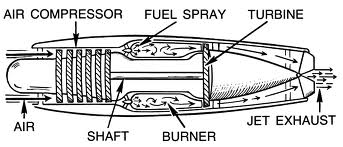
I've been in a number of conversations lately where I have realized in the middle of the discussion that the person I was talking to was not merely confused about something, but was totally ignorant of the subject from every possible angle, from historical context to practical application. The latest example was a discussion I was having about jet engines with an actual engineer. Yes, an engineer. An engineer who apparently had no idea what a turboprop was, what the "turbo" and "prop" roots meant or even seemed to understand the most basic principles of "jet engines" and why they are so widely used for power generation. The jaw-dropping moment came when the subject of "internal combustion" vs "external combustion" came up and they simply could not wrap their mind around the concept that a jet engine was an "internal combustion" engine. In their mind "internal combustion" meant "piston", even though the most common external combustion engines (steam engines in particular) are piston engines. It was weird. Just weird. jet engine I mean it's not as if jet engines are that complex. At their root they are incredibly simple. You have a compressor to improve power efficiency, a combustion chamber to burn the fuel-air mix, and a turbine that converts the high-pressure gas outflow into usable work. The concepts and physical properties of a jet engine go back hundreds of years, but the key design breakthrough that allowed them to become ubiquitous power generators was when the compressor was coupled to the turbine allowing the engine to be self-compressing. What seemed to throw the engineer I was talking to was their narrow view of a "jet engine" as being something you find on an airplane. They could not wrap their mind around the idea that "jet engines" can drive propellers or electric generators. They seemed unable to abstract the notion of "jet engine" as a generic power source that can do pretty much anything a piston engine could do, sometimes more, sometimes less efficiently, depending on the purpose and designs of the engines. I could focus on the lack of technical awareness of the engineer and blame it on their attention or schooling, but the real issue is that they clearly had no understanding of the historical context of jet engine development. If they did, all the other stuff would be automatic. I see this lack of historical context everywhere. Why do cars have gasoline engines instead of, for example, kerosine? How does a nuclear power plant work? What is a "turbo-charger" in an automobile? Why are they sometimes used, and sometimes not, and where did they come from? More and more as I talk to people about things I wonder if my entire thought process is so unusual as to be almost unique. I can't help but try to fit pretty much everything I know into some sort of historical context which includes the causes and effects of change. I think that allows me to have a much more holistic view of the world. I can't think about turbines without automatically contemplating the aelopile, which was the first functioning turbine created in ancient Greece. That automatically makes me start contemplating external vs internal combustion engines, and my mind will more or less automatically roam around different types of engines and what makes them unique, and why some are, and some are not, used. There used to be a show on PBS called "Connections." That show probably was closer to how my mind works than any other thing I can think of. It was a fascinating look at how history was driven not by singular events occurring in a vacuum, but how almost every event was intricately tied to other events in a complex web of cause, effect and inspiration. I think that's the best way to view the world. But I don't know if other people really even understand it. Or care.

Movie Review: World War Z

By CosmicConservative
Yeah, two movie reviews in less than a week. Z_movie I didn't realize we were going to see this movie. The Cosmic Wife and Daughter and I went to go see "Monster University" and after dropping them off to go park the car, I met up with them to discover that the wife and I were watching a zombie movie while the daughter watched the Pixar offering. I had been sort of intrigued by the "fast zombies" concept of the movie and figured "what the heck" and soon we were watching the world descend into an undead nightmare. I suppose this isn't really a movie review anyway, more a treatise on the concept of zombies in popular culture and the problems they present from any sort of scientific, rational or logical perspective. The movie was OK, not great, but as B movies go, it was an OK way to waste a couple of hours. I can't believe how much they spent making the movie and the end result, other than the zombies moving fast, is strictly your standard zombies vs humans story. I can't believe it's raking in the money it's raking in either. I had thought at the very least the movie might explore the concepts of swarming behavior by having humans swarm like locusts or ants, and it is clear from the visual effects and the initial montage of different animal swarms that this was originally supposed to be something that was explored, but in the end all that survived the editing process was a bunch of running, biting, jumping, shooting and screaming. But zombies... I have lots of problems with most forms of "undead" creatures, just from a thermodynamics perspective alone, but beyond that, zombies are particularly problematic from any sort of bio-mechanical or bio-chemical perspective. Unless the zombification process somehow revokes the laws of physics, zombies just can't work they way they are portrayed. In order for them to have any physical activities whatsoever, even just to LISTEN for a sound, they have to expend energy. That means they have to acquire energy from somewhere. Otherwise the end result of any zombie movie would be the use of zombies as infinite energy sources. Just put a bunch of zombies in a hamster wheel and let them run blindly in place and there you go, infinite zombie-powered electric turbine. Zombies are the solution to our energy woes. But in movie after movie zombies are portrayed as the perpetual motion machine of undead monsters. They just keep on going and going and going, even when they have had no food for days, weeks, months, years.... This movie in particular was noteworthy since the zombies had an urge to BITE humans but showed no particular desire to CONSUME human flesh. They just bit and moved on to bite again, leaving their infected victim to morph into a thermodynamically impossible creature themselves. Which brings me to the concept of modern "virus" zombies, or zombie movies where the humans become zombies because they are infected with a zombie virus. The problem here is that necrotic human tissue does not function. When you die, your body's cells undergo a biochemical process that effectively rots your tissue from the cellular level out. Muscle cells no longer have the ability to contract. Nerve cells no longer have the ability to respond to stimuli or send messages. The virus may infect a body, but once the human is dead, the virus is stuck in a dead body. The only feasible "zombie" process is a process where the human victim doesn't really die, but is instead driven insane by the virus and begins to act in ways we would recognize as "zombie" behavior. There is actual biological precedence for this. Many fungi are known to infect insects and cause them to behave in very specific ways which then helps to spread the fungus to new hosts. Ants infected by some parasitic fungi stop acting like ants and instead climb to the top of plants where they cling to a leaf or twig as the fungus erupts out of their bodies and spores are sent seeking new ants. But that sort of zombification is still biological. The zombie ants will die just as an uninfected ant would die from most things that would kill an ant. So why do I care about this? Because it is my opinion that biologically plausible zombies are far more frightening than the thermodynamically impossible zombies because they could actually exist! World War Z would have been a much better movie had the writers bothered to try to make a biologically and thermodynamically plausible zombie instead of a tired zombie retread. The zombies in World War Z, other than their tendency to swarm and move fast, looked and acted just like the zombies in "Plan 9 from Outer Space." You would think $130 million, modern CGI and an A-List actor like Brad Pitt would get you a better version of a zombie. You would be wrong.

Superman and kryptonite...

By CosmicConservative
My mind was wandering earlier today and stumbled across this little gem somewhere in the depths of my cranium... Superman would be a much more interesting comic book if kryptonite was addictive.

Lindsey Lohan to play Elizabeth Taylor

By CosmicConservative
Really?

They have been described as having one of the greatest love affairs of the 20th century, marrying twice and living out a turbulent relationship in the public eye.

And now Elizabeth Taylor and Richard Burton's romance is being recreated by Lindsay Lohan and Grant Bowler in new Lifetime biopic Liz and Dick.

via Lindsay Lohan and Grant Bowler recreate Elizabeth Taylor and Richard Burton's famous romance in first official picture from TV biopic | Mail Online.

I'm sorry. Lindsey Lohan has a certain appeal for sure, or at least she used to, but Elizabeth Taylor was not only one of the most beautiful women in Hollywood's history, she had a sort of elegant, sophisticated beauty that is simply difficult to imagine Lindsey Lohan even appreciating, much less emulating. I can't help but think that hundreds of actresses would be better to pull of Elizabeth Taylor. Why the heck did they pick this wreck? I try hard not to be catty about people's looks, and Lindsey Lohan does have a certain raw girl-next-door appeal in some cases, but look at that photo. What are they going to do? Digitally create an hourglass figure for her?

We need a new post-galactic universal model measuring unit

By CosmicConservative
I'm tired of reading that such and so astronomical object is "only 34 million light years" away, or "300 million light years.." or whatever. Astronomers don't actually use light-years as the "official" astronomical measuring unit. They use the "parsec" which is a derived measurement based on the parallax of earth's orbital diameter. A parsec is about 3.25 light years. For longer distances they use "mega-parsec" which is a million parsecs or some other such variation. But you never see those used because "parsec" is such a weird word that most people don't recognize it as a distance measure anyway. That's why the original Star Wars movie used "parsec" as a unit of time in Han Solo's famous defense of the Millenium Falcon. Anytime you have to throw "kilo-" and "mega" and "tera" onto something to measure it, you've pretty much proven that the base measure is sort of meaningless. So, I propose that we define a new unit of measurement based on the size of our local group of galaxies. The average diameter of the volume of space containing the local group could be called one "cluster unit" or shortened to one "clunit". Therefore the distance to any astronomical object would be defined in terms that relate to the size of our local group. The nearest galactic cluster might then be 12 clunits away. The Andromeda galaxy might be .01 clunits. That would immediately show that the Andromeda galaxy is pretty friggin close in galactic terms. The farthest items in the universe would then be a few thousand clunits distant. I think anyway. I'm too lazy to do the actual math, but I think it would work out that way. This sort of things puts the units in an astronomical context, instantly giving the reader a sense of scale of the distance being discussed. Anything 1 clunit or less is clearly pretty close. Anything 100 clunits or farther is pretty far out there. 1,000 clunits and you're getting to the edge of the universe... Makes perfect sense to me...

On "Spirituality"

By CosmicConservative
On my previous post a comment was made about my view of "spirituality" which essentially expressed surprise that I would even bring up "spirituality" since in general I seem not to "believe" in such things. That's unfortunate since my view of spiritual things is, in my perhaps self-centered view, complex and subtle. But first I must approach the whole concept of "belief." This is a very critical thing to understand about me, especially since so many people toss around the idea of "belief" with such casual abandon that it becomes a ubiquitous, inchoate rationale for any philosophy or ideology. Which is unfortunate because I think "belief" is a key attribute of most religions, but not much else. One thing I see and hear a lot from people is that "you have to believe something." For example, if someone challenges a particular religious concept of the creation of the universe, it is not uncommon to hear the retort "well, you BEELLIIEEVVEE in the Big Bang, that's the same thing!" Except it's not. See, here's the problem. In the purest, most intellectually profound, philosophically important sense, I don't "believe" anything. I "accept" certain things as practical reality, but that's not the same thing as "belief." For example, I accept, as a practical reality, that if I step off a roof, I will fall. But I don't "believe" any explanation of why I fall. I don't "believe" in gravity. I accept as a practical reality that I will fall. This is why I don't follow any particular religion. I simply don't "believe" any religious back story. They all sound equally absurd and unrealistic to me. But this is also why I'm not an atheist. I find it just as hard to "believe" that there IS NO GOD as I find it to "believe" that there IS A GOD. There simply isn't sufficient evidence to reach a rationally defensible conclusion on the subject of the existence or non-existence of god. Oh I have IDEAS about God. But they don't match any religion that I have ever encountered. And for most people, my ideas about God would no doubt qualify as heresy or worse. So I don't talk about it much. Now, as a matter of practical use of language, I will frequently use the word "believe" in the colloquial sense, and could well do so in this very post, but I don't apologize for that. It is virtually impossible to communicate with others without relying on colloquialisms. But take my word for it, I don't "believe" anything in any sense of the word which implies that I have any certainty whatsoever about the fundamental nature of the universe. So, getting back to "spirituality"... well, what is "spirituality?" I'm sure there are thousands of mutually incompatible definitions of the word, but I'll go ahead and explain what I mean by the word. It's pretty simple. The universe as we observe it appears to follow certain immutable principles. Among those principles are things like the Laws of Thermodynamics (particularly the second law), and other things like the Theory of Relativity (which describes limits to causality and the direction arrow of time). My view of this can be generalized as the concept that our universe is governed by physical laws that appear to be unbreakable. Now, remember I don't "believe" anything. So I don't "believe" this. However, I am willing to accept as a practical reality that these limits describe reality better than anything else humans have ever used to describe reality. And my experience and review of the history of the world indicates to me that these principles effectively describe pretty much everything that can be objectively verified. As an example, I accept as a practical reality that death is permanent and irreversible. I know there are all kinds of stories from just about every religion on earth about death being reversed. I don't believe them. I know there are millions of stories from people who claim to have encountered "spirits" who were once living humans. I don't believe them. (Besides, I find the whole concept of the spirits of my ancestors "watching over me" infinitely creepy. If spirits are watching me all the time, they are seeing lots of things I don't want them to see, ranging from me picking my nose to me perhaps throwing childish temper tantrums. Such voyeurism is highly objectionable to me on principled grounds.) In spite of this, I don't reject the notion that there is something beyond the expression of universal principles such as thermodynamics. In fact I, like pretty much every human being, desperately HOPE that there is something beyond what we understand about those principles. This is in large part because I don't like what those laws predict about the final disposition of the universe and everything in it. But beyond even that, I have some odd notions about things such as "free will" and "physical continuity". I find it philosophically unappealing to conclude that our universe is completely deterministic, and I find it equally philosophically unappealing to conclude that our universe is driven by some combination of deterministic laws and random quantum effects. Neither of those explanations allows me to explain "free will." I think I've said before on this blog that there is nothing that is as important as the concept of "free will." Nothing. Without free will there is no purpose to the universe, no hope for individual accomplishment and no purpose in valuing the concept of "quality of life." And yet free will is completely outside the ability of our current understanding of the principles of the universe to explain. In fact, our current understanding of the principles of the universe would seem to exclude free will as a concept. Perhaps I should say that although I don't think I "believe" anything, the only thing I MIGHT BELIEVE IN is free will. But that's purely a selfish thing. I want to believe in free will because I can't conceive of a universe with any meaning or purpose in the absence of free will. So, in a nutshell, my concept of spirituality is totally and inextricably intertwined with the concept of free will. So when I talk about how I need to work on my "spiritual side" that can almost always be interpreted as a need to address making better choices and exerting more willpower to make those better choices. My pursuit of understanding "free will" takes me to some pretty weird places too. I wonder sometimes if the "real world" is just some sort of illusion and our "spiritual nature" is expressed through the real world as part of some process to provide growth opportunities, or even testing, of our moral compass. In that sense my concept of "spirituality" wanders into the realm of religion. But it wanders strange, uncommon and potentially untracked paths through that realm. During those moments I can entertain the notion of extra-physical continuities of will, something that might be construed as a "soul". However, when contemplating that possibility, I rarely venture into the brightly lit venues of organized religion, tending towards shadowy realms with treacherous philosophical foundations where anthropomorphic interpretations are almost rejected out of hand, even if that leaves the realm unformed and chaotic. In that sense I am a deeply spiritual person. It's just that most people probably would not recognize my travels in that realm as what they mean by "spirituality." Not sure if this helps or not.

The great missile attack of Nov, 2010!

By CosmicConservative
Military and aviation officials said Tuesday they don't know who may have launched a mysterious object spotted in the sky late Monday off the Southern California coast, but noted that whatever the projectile was, it did not pose a threat to national security. A KCBS news helicopter spotted what appeared to be a missile traveling through the sky northwest of Catalina Island, about 35 miles west of Los Angeles. via Mystery 'missile' launch near L.A. no threat to national security, government officials say [Updated] | L.A. NOW | Los Angeles Times.
My immediate thought on this when I saw it was "that looks like a jet contrail to me." Sure it resembles a missile exhaust plume too, but I've seen contrails that look like missile exhaust plumes before. Using Occam's razor here, I'd say it is far more likely this is a mis-identified jet airplane contrail than it is a missile launched from 30 miles off the coast of Los Angeles by some nefarious unknown power. Just my $.02

Potentially disgusting observation...

By CosmicConservative
So, I was filing down my nails a few minutes ago and happened to get a whiff of nail file dust, and dang if it didn't smell almost exactly like when the dentist was drilling my tooth root the other day... Actually made me cringe a bit.

UFO News... or a reasonable facsimile thereof

By CosmicConservative
(Sept. 21) -- UFOs have monitored and possibly tampered with American nuclear weapons, according to a group of former Air Force officers who will make their claims public next week at a Washington, D.C., news conference. "While most of the incidents apparently involved mere surveillance, in a few cases, a significant number of nuclear missiles suddenly and simultaneously malfunctioned, just as USAF security policemen reported seeing disc-shaped craft hovering nearby," says Robert Hastings, author of "UFOs and Nukes: Extraordinary Encounters at Nuclear Weapons Sites." via UFOs Visited Nuclear Weapons Sites, Former Air Force Officers Say.
Sigh.... UFOs... In a world where elected city officials think opossums will solve their rat problem and then just quietly die off, it's easy to see why people are so willing to believe this stuff. The most hilarious thing about this article is that they used, as proof of the serious nature of UFO claims, the fact that a U.S. President once filed a UFO report. That President? Jimmy frickin' Carter... That's some serious credibility support right there... The first photo in the slideshow is supposed to be a convincing UFO photo. I can't copy it down because they made it unsavable, but the photo is of a fairly typical lenticular cloud, such as this one here which looks nearly identical to the "UFO" in the Fox AOL News "news" story... ufo cloud Again, I have to assume that the "science reporters" at Fox AOL News are as ignorant and gullible as "science reporters" at any other "news" outlet. Since there has recently been a release of "classified UFO secrets" from both the Soviet Union and the UK, and now we've got this coming out from retired US military officers, I have to assume that there is some concerted effort to gin up the UFO industry again...