Cosmic Conservative

Rational Conservatism from the heart of America

Science & Technology

Fusion breakthrough?

By CosmicConservative
This week I've seen three separate stories about three different fusion "breakthroughs". This story is about an announcement from Lockheed's "Skunkworks" experimental development team. Luckily it includes a cool technical looking photo that probably has nothing to do with the actual fusion reactor, but it looks great. If this story, or one of the others I've seen, pans out, this could be the biggest thing that has happened to the human race since the industrial revolution. Maybe even bigger.

The country who owned the moon

By CosmicConservative
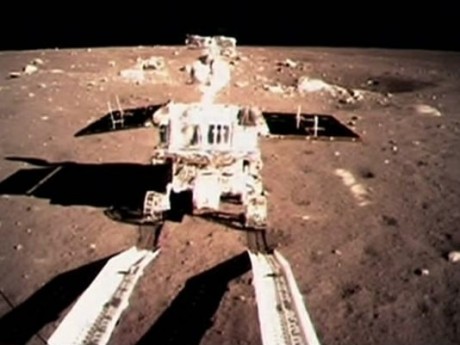
When I was a kid, one of the first Robert Heinlein books I read was a fascinating story about a guy who bought up all the land on earth which lay directly under the orbital path of the moon. Then, by virtue of some outdated property and mineral rights descriptions, laid a claim to the moon. It was called "The Man Who Sold The Moon." image Well, there is a real chance that China is ramping up to claim ownership of some or all of the moon. If they do, it will precipitate an international crisis and could even create military tension between China and other nations that have agreed to keep the moon as an international property. In reality it will probably be a good thing if China does precipitate this sort of international crisis. One of the reasons there is so little desire to exploit lunar resources is that the current international treaties don't leave much room for staking claims on the moon. In the end it is the ability to exploit resources and colonize land that motivates people to colonize new lands, and that will be as true of the moon as any other potential colonization site. If property rights do become available and nations start carving the moon up, our prospects for true interstellar space flight will have become measurably more likely.

Cassini photo of Saturn

By CosmicConservative
When I was a kid, one of my favorite things was to see art on sci-fi books that showed us perspectives of astronomical objects that were impossible to obtain from earth. Illustrations like this photo of Saturn from the Cassini probe. Simply awesome. Saturn_cassini

The end of the 40 hour work week

By CosmicConservative
time_clock One of the things I've been contemplating for quite a long time is the inevitable impact of automation and technology on the traditional concept of "working for a living." There are at least two major forces in play that will change the way we think about how individual members of society add value to society and gain reward for doing so. 1. Automation and technology will replace at least 80% of the jobs most people do today, especially young and/or unskilled workers. Flipping burgers, stocking shelves, running cash registers, digging ditches, mowing lawns... all of that will be gone. Even the jobs of many skilled workers will fade into the sunset as cars, trucks, taxis, airplanes, buses and any other means of transportation are controlled by automated driving systems. Building homes will be replaced with giant machines that create a home in place according to architectural plans that are both standardized and customizable at the touch of a computer screen. It is hard to come up with a job that is not in a creative field that will not be replaced or greatly diminished by automated systems. That simply means there will not be enough work to employ a majority of human beings. Not the way we currently think of "work" anyway.
2. Wealth generation has become increasingly divorced from human muscle and skill for over a century now. This trend is also accelerating. The first things to be automated will be factories that make stuff that used to be made by people. In a short time the limiting factor on the production of goods will not be the availability of muscle, skill and resources, instead it will be the lack of liquid cash alone. Which is interesting since liquid cash is supposedly simply a means to facilitate the production of goods and services. That strongly suggests that we need a new economic model, one which eventually totally divorces the concept of "working for a living" from the ability to amass goods and receive services. At some point in the future it will be pointless to make people "work" for basic necessities of life, including housing, food, water and a wide selection of consumer products including most of what people spend their hard-earned money on today. Obamacare is, perhaps intentionally, perhaps coincidentally, accelerating this. Pretty soon you will start seeing a push for the work week to be reduced, probably to 32 hours at first, but eventually to 20 hours or less. This will be the first order approximation to adjust to a new world where human muscle and skill is no longer the driving force of the economy. But in the end I believe "work" will be completely divorced from the economics of basic human needs, and "work" will then become what people do to earn status alone. And status will have some other markers than "money". I'm not sure what it will be, but it will probably be some sort of social ranking that is attained through investment of time and effort into creative endeavors such as the arts, or contributing to social improvements through teaching, mentoring or organizing cultural activities. There will still be some level of direction that will require humans to run, at least until the worldwide artificial intelligence eventually takes over that too. But that will be determined through the social status, not through the acquisition of wealth. I can see a time in the not so distant future where being the world's best video game player provides the status that is needed for someone to become a political power.

IPCC "dials back" Global Warming alarmism

By CosmicConservative
This Wall Street Journal story is actually a significant one that will be ignored by the mainstream media and the political power brokers who have preyed on people's fears of trumped up Global Warming Alarmism. Global-Warming What is happening is that the Intergovernmental Panel on Climate Change (IPCC) the U.N. body that has been at the heart of trumped up Global Warming alarmism for the past 25 years or so is retreating from their claims of doom and gloom. At least they will be if this leaked version of their next report ends up being what is published. I am sure the Michael Mann zealots within the IPCC are fighting tooth and nail to keep the IPCC from retreating at all, and they could still prevail before the official version is released. But I suspect not. I suspect that the true scientists who have had their names tied to this mess for years have finally decided that science is not served by zealotry, political favoritism and the enslavement of the name of "science" in the service of ideological goals. The bottom line is that if this report is accurate and is what is published, the IPCC will have marched a long way to what I have been saying for years. And that is that whether Global Warming is happening or not, the role of CO2 has been highly exaggerated, the consequences have been ridiculously hyped and there are very true and compelling benefits to the world warming up a bit more, including longer and wetter growing seasons and the opening up of literally tens of thousands of square miles of previously unsuitable land for new farming areas. The geography of the earth just happens to be such that the further north you go, the more land mass you find. That means that warming the earth up a degree or so opens up huge areas in Alaska, Canada and Russia to become suitable land for farming. And a warmer world is a wetter world, which should mean less need for irrigation. This is the first time in 20 years that I've seen compelling evidence that the zealots are losing control of the narrative within the scientific community. That's big news.

"Super Earth" or super Earth?

By CosmicConservative
So this story omits one very interesting detail. super_earth This planet is stated as having a radius 2.6 times that of earth and a mass 7 times that of earth. What do you suppose the gravity on the surface of such a planet would be? Three times that of earth? Ten times? Would you believe that the gravity on such a planet would actually be 104% of earth's gravity? In other words it would be within 5% of the force of gravity on earth? Such a difference would be barely noticeable. Meaning the surface of this planet is a place you could walk, run and play normally. Assuming it had land to do so. The surface area of the planet would be almost seven times as large. Meaning if this discovery is true, we've just found a planet we could walk on that is as big as seven earths. That's pretty big news I would think.

Online multiplayer space conquest game

By CosmicConservative
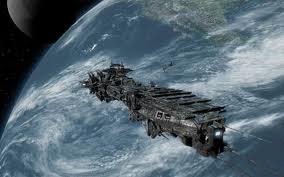
So, while we were playing "Grepolis" for the past few months, Drax and I had a number of phone calls to coordinate activities and discuss strategy. As part of that we discussed what we liked and didn't like about the Grepolis game. As that sort of thing goes in our conversations, that led us to what sort of combat/conquest strategy game we'd like to play. And that led us to the idea of a galactic conquest game. spaceship A long time ago, in a previous life, I used to play a game called "Reach For The Stars", which was a game that was published on a variety of PC platforms, including Commodore, PC and Macintosh. It was actually a pretty good game, but it wasn't massively multi-player. It did allow up to six players I think, but it was turn-based and everyone had to take their turns at the computer to make their moves and watch the outcome. At the highest level what I'd like to see is a massively multiplayer online game similar in concept to "Reach For The Stars." So Drax said "why don't you write one." Hmmm... well, I USED to be a programmer. I USED to write games. I USED to build enterprise wide systems capable of running a massively multiplayer game... But that was a long time ago... Still, it's an intriguing idea. If I were to pursue this, here are some things I would want to do:
  1. Most games that are a mix of resource development, military buildup, travel and combat require a huge investment of time in what are, to me, the less interesting aspects of the game like configuring resource management and shuffling resources around. I know that this is a major factor in actual wartime, but I also know that by and large generals leave those details up to subordinates. Generals say "Build me a bunch of tanks and deliver them to this location" and move on to the next agenda item. They don't worry about where to mine the iron, how to smelt it and produce steel, how much steel is needed vs rubber, glass, etc. If someone WANTS to deal with their resources at that level, that's fine, but I'd rather not spend hours per day micro-managing the mines. What I WOULD like is the ability to choose between different subordinates and assign to THEM these details and then monitor status and perhaps tweak the approach of the subordinates by issuing directives to them.
  2. Games that I've played treat all military units as interchangeable cogs. One ship is exactly the same as another. In fact, from a programming perspective, each military unit is frequently nothing more than a number in a list. There is no actual ship, when a ship is added the number of "ships" is increased by 1. In a game I would create I would have each individual unit be a unique object with a history and several attributes which are tracked separately, some of which might be modified based on the ship's history. (For example two identical ships might have significantly different combat effectiveness due entirely to the number of battles they have survived.) Yes, this means the process of conducting an actual battle will be quite complex, but hey, that's what programmers are supposed to deal with, right?
  3. The main issue I have with games like Grepolis is that the game requires constant monitoring and this is just not possible for me, or many other people, to do because we have actual LIVES that take precedence over playing a dang game. So the game needs to have some way to allow the player to play when they can play, and to deal with real life when they need to, without constant fear of losing a key military base just because they happened to be asleep at the time. At the same time, the game can't simply go on "pause" mode anytime any single player is unable to play or the game would NEVER move forward. It is my opinion that the game that best resolves this issue is the game that will become the "killer app" of online military strategy games. My initial cut at how to deal with this is to allow the game to create and execute plans. That way the player can set up a series of events and/or triggers with responses and log off secure in the expectation that their plans will be executed and that their pre-planned response will kick in if certain events occur. (For example, if a particularly military asset is under attack, a specific response plan can be triggered and executed.)
  4. It is a rare game that allows for any re-distribution of forces. I don't know if that is due to a lack of awareness of how wars actually happen, if it is due to lazy programming, or if it is some misguided effort to enforce "game balance." But I personally see no reason that entire armies or fleets could not be delivered to another player, according to whatever exchange the two players agree to. The caveat to this is in the next bullet, which is "support and supply lines"
  5. It is perhaps the oldest adage in military history, but it is just as true today as it was when Sun Tzu cautioned military leaders about it, and that is that armies "march on their stomachs." In today's terms that means more than just biological stomachs. A military operation is only as successful as the supply lines allow it to be. A command chain that cannot provide support for their armies and fleets is a command chain that will lose wars. While this can be abstracted to some degree, a truly accurate wargame should have military units that use up resources and those resources should need a supply chain to keep the units combat ready. Disrupting these supply chains has always been a major combat strategy. If a command somehow gains units that they cannot support, those units will either disband, mutiny or join another player's fleet/army. Of course that means the game has to have an element that allows for the creation, management and disruption of supply chains.
  6. Most wargames have completely arbitrary means of providing "game balance", most frequently in the area of defense vs offense. Many games just arbitrarily make defense stronger than offense so that you get the result of needing something like 3x the number of offensive units being needed to overcome defenses. I would like to think that there are ways to make actual tactics more meaningful. In other words, defensive troops should only be "more effective" because they have employed specific tactics that make it harder to overcome them. They shouldn't be harder to kill just because someone clicked the "defend" button instead of the "attack" button.
  7. In a strategy game, strategy should actually, you know, matter. Right now most wargames I've played are called "strategy" games because they fit some commercially derived genre, not because they actually encourage or even promote strategic gaming. Grepolis is about as "strategic" as checkers. And that might be an insult to checkers. In order to make strategy matter, there have to be actual strategic options and goals for the players to engage. And good strategies should be rewarded while poor strategies should be punished. Again, picking on Grepolis, there is virtually no actual strategic impact in the game. The game boils down to pure brute strength and the ability to build enough cities to out produce your enemies. And that boils down mostly to who is willing to invest more of their personal time into the game, not who is actually BETTER at planning and executing strategies.
Anyway, I could (as usual) go on (and on and on). The bottom line is that I am intrigued by the possibility of re-entering the gaming world by working on a massively multi-player real-time galactic conquest strategy game. But there's this little novel I've been trying to finish...

Battleship!

By CosmicConservative
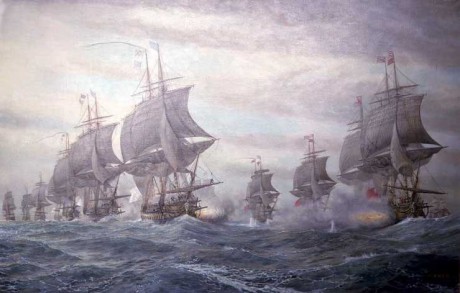
Yeah, my brain has continued to delve into my understanding of naval history and terminology, as checkered, incomplete and perhaps confused as it may be. Consider the naming of ships. A century ago Naval warfare was dominated by the "Battleship." The actual name "battleship" is a contraction of "line of battle ship", which referred to the 18th century naval tactic of lining up several "ships of the line" to fire massive multi-ship broadsides at the enemy. Back then a ship involved in the line of battle was not designated as a "battleship" but instead was designated as a "ship of the line". line_of_battle I find this sort of historical rumination to be incredibly fascinating. Back at the end of the 18th century, the newly created US Congress had approved the construction and maintenance of nine ships of the line. The first of these, as I recall, was the USS Independence, and as has become the custom since, the subsequent ships created in the same design were called "Independence class" ships of the line. At that time Great Britain probably had several dozen ships of the line, which should give some indication of the difference in naval power between the USA and Great Britain. It would be difficult, for example, to consider nine ships to constitute an "armada". And that would be if the US had actually completed the nine ships commissioned. In fact the USA had a rather dismal record in creating ships of the line. Attempts to build such ships during the Revolutionary War period were rapidly abandoned or the shipyards captured so no such ships were completed. An additional set of ships originally intended to be built around 1800 were abandoned as the USA decided to honor George Washington's admonition to avoid foreign entanglements. It wasn't until the aftermath of the War of 1812 that the USA decided that such a show of force would actually be beneficial, and while the resulting few ships of the line along with the small navy of frigates and other smaller ships might not have been much of a deterrent to the massive fleets of European nations, they did allow the USA to discourage piracy against US naval and merchant ships. Eventually the US did manage to launch the approved nine-ship "fleet" of such ships, but it took almost a decade to do so, and in the process several ships were aborted in the build process due to the rapidly changing nature of warfare. By the time the ninth ship was officially launched in 1820 the nature of naval combat was already changing due to the advancement of artillery technology, and the USA focused further shipbuilding on faster, smaller ships armed with more advanced guns. As for the "ships of the line" themselves, these first "battleships" for the most part had remarkably unimpressive careers. In part that was because the period between 1820 and the Civil War was a period the USA managed to avoid major conflict with European powers who could overwhelm the tiny American line. Most of the ships barely saw any combat at all and most served as flagships or performed diplomatic duties while the day-to-day naval engagements of the period were managed by the more numerous and less costly frigates of the navy. The Civil War itself introduced the concept of iron-clad ships and that so radically changed the nature of naval combat that ships of the line become obsolete more or less overnight. About the only thing that these ships bequeathed to their metal successors was the name "battleship" which was never an official designation until the Age of Sail was over and the steam-powered dreadnaughts ruled the seas.

What is a keel?

By CosmicConservative
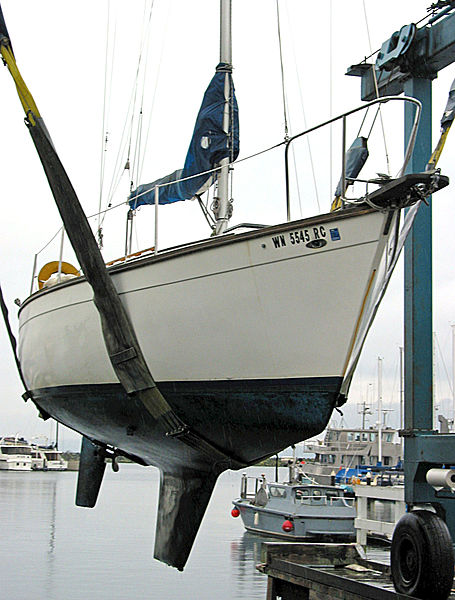
So, commenter jsullins asked in the Sailing post comment area what a keel was. I suspect he's being disingenuous, but I am never one to overlook an opportunity to expound on what I consider to be major developments in technology. "Keel" is an interesting word. It's etymology is derived from ancient anglo-saxon words for "boat" or "ship". (Back then "boat" and "ship" were not really separate concepts. That came later in the age of big ships.) There are two simultaneous and in some cases overlapping meanings for the word "keel". The most commonly recognized usage is to describe the "backbone" of a ship. "Laying the keel" is the first step for building wooden sailing ships, and continued to be the first step for building steel-hulled ships for a long time until shipbuilding became a modular enterprise where the "keel" is incorporated into the modular elements of the hull. In that sense the "keel" is the massive timber used to provide the boat's longitudinal stability and the primary structural element of the entire hull. Creating a keel is a complex process involving the joinery of massive wooden beams to create the desired hull shape. The keel is the single most important structural element in large wooden ships and breaking or damaging the keel usually means the loss of the ship since repairing the ship would require virtually rebuilding it from scratch. However, that's not the use of "keel" I was invoking in the other post. The other use of "keel" is to describe a long plane which extends vertically below a sailing ship to provide stability for the boat to offset the tendency of the wind to blow a sailing ship over. Or at least nautical historians speculate that was the original purpose of such a keel. It was not long after the introduction of keels of this sort (which sometimes are incorporated into the keel of the first sort) that sailors discovered that by angling the direction of the boat in relation to the configuration of the sails, the end result was that the ship could actually sail partially upwind. ship_with_keel Here is how that works. In the case of a fore-and-aft sail, the sail acts more like an airfoil than what people think of as a "sail". That means that as the wind flows across the sail, it provides lift just like an airplane wing. That lift can be perpendicular to the direction of the wind itself. However, the sail still has some aerodynamic drag, meaning that it the final vector of force from the sail is still downwind, meaning that from pure sail effects, a ship cannot sail upwind. What a keel does is provide a deflecting force in the water which adds another thrust vector to the overall ship dynamic. That thrust vector, when added to the sail vector, if managed carefully and properly, provides a combined thrust vector that can be at least partially directed in the direction of the wind. While it is more or less impossible to sail directly upwind a well designed sailing boat/ship can achieve thrust that can be as much as 30 degrees into the wind. To sail in a specific direction is then done by "tacking" which is the process of sailing upwind to the "left" then reconfiguring the sails to sail upwind to the "right" ending up with a zig-zag back and forth across the desired line of travel. Because of the dual use of the term, and because in some ships the structural integrity and directional stability aspects are completely separate, other terms are used like "centerboard" or "daggerboard" or other terms to describe particular implementations in different ship designs. Most modern sailboats of the type you see on public lakes and in harbors have retractable keels which pivot up and down to allow the boat to dock in shallow waters, dropping the keel when they reach deeper water. "Keelhauling" was a disciplinary tactic employed in the age of sail which involved tying a problematic sailor or prisoner to a rope and dragging them underwater from one side of the boat to the other under the hull and across the keel. Many times this resulted in the death of the individual, especially on larger ships.

Sailing

By CosmicConservative
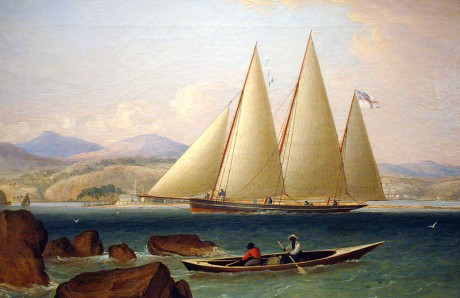
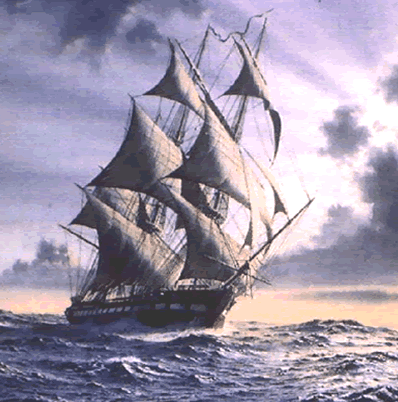
I've never sailed a ship. I've never even been on a sailing ship while it is moving under sail. I've been on sailing ships at port and was once on a "sailboat" that had its sails "shipped" and was moving under the power of a small outboard motor. But I've never sailed. Which is sort of a shame since I find sailing ships to be one of the most amazing, elegant and earth-changing developments ever created by the human race. bermuda_sloop There is an amazing depth and breadth of knowledge required to understand how to sail a ship. That includes knowledge of the different aerodynamic properties of a bewildering number of different types of sails and how these different types of sails work together or work against each other. It also requires an understanding of the complex and dynamic needs of deploying, manipulating, retrieving and storing the sails, which is usually done through a series of ropes, pulleys, grommets, masts and rigging. And all of that requires an encyclopedic knowledge of different kinds of knots and when, where and how to tie them. The painting above depicts a naval vessel in the "bermuda rig" configuration. This has become probably the most common configuration of sailing ships large and small today. That can be compared to the "full-rigged" painting of the USS Constitution below: constitution-painting1 Contrary to what you see in movies, the process of changing the direction of a sailing ship was not done by turning the wheel which turned the rudder. The rudder can only redirect a moving ship and if the new direction is incompatible with the sail rigging, the ship will lose momentum and may even expose the sails and masts to stress from the wind that could damage them. So changing direction in full sail meant changing the configuration of the sails to redirect the forces of the wind and the keel to provide a new direction of movement that could be maintained over time. And to do that a ship captain had to be able to bellow out the commands necessary to manipulate every sail necessary to achieve the new configuration. In some cases that meant reconfiguring dozens of individual sails. Being a sailing ship captain was not easy.