Memory Lane
Best theme song #3: Rockford Files
By CosmicConservative
Best I could find. Not so good though.
Best theme songs #2: Andy Griffith:
By CosmicConservativeBest theme songs #1: Hawaii 5-0
By CosmicConservativeBest TV show theme music?
By CosmicConservativeOK, so this is a sort of child thread from the "best sit-com ever" thread. But I think it deserves its own thread. I'm expanding the list here to any TV show becuase there are so few memorable theme songs/music to choose from that restricting it to sit-coms is probably too restrictive.
In my mind there are generally three different kinds of theme music. So I'll nominate some from each category, plus at least one from the "totally different" category:
So, first I'll go with "Theme Songs that provide exposition:"
- Gilligan's Island: (I still have both the introductory and the closing parts of this song memorized.) This tells the story of how the castaways were stranded and introduces the characters very nicely. Composed by John Williams. Seriously.
- Beverly Hillbillies: This song, "The Ballad of Jed Clampett" was performed by country music legends Lester Flatt and Earl Scruggs. It was a #1 hit on the country chart and was a top 50 hit on the pop charts. I'm tempted to say that this is a no-brainer, except for the first one in the instrumental list down below.
- The Brady Bunch: Again, the song sets up the situation, introduces the characters and is a fairly catchy little tune.
- GreenAcres: (I think it's no coincidence that three of these were written by the same person) Exposition is nicely done, and the fact that Eddie Albert and Eva Gabor actually do the vocals is nice.
- The Addams Family: No real exposition, no real introduction, but an interesting song which sets the tone for the show quite well.
- The Monkees: Really excellent catchy tune. Great lyrics, great energy. To this day I find myself humming or whistling or even singing this as I'm driving down the road.
- Sesame Street: I doubt people even think about this song, but it's actually a very nice little tune. Plus it's a cultural icon.
- The Courtship of Eddie's Father: Man, just hearing this song brings back memories. I almost put this in the exposition, but it really isn't exposition, it's just a celebration of a dad's relationship with a young son. "People let me tell you 'bout my bee-est friend, he's a one boy cuddly toy, my up my down my pride and joy...." Rarely has pure love been expressed so well.
- All in the Family: I never thought I'd hear the words "Mister we could use a man like Herbert Hoover again" and actually agree with them.
- Cheers: I suppose it has to be on this list. I always found the song to be a bit listless and smarmy, but maybe that's just 'cause I don't like bars.
- The Rockford Files: This theme song actually made it into the top ten on the pop charts if I remember. Talk about a catchy tune.
- Andy Griffith show theme song: Probably the only song I've ever heard that is purely whistled and makes me snap my fingers and tap my feet. I love this theme song. And, yes, I do consider whisting to be "instrumental."
- The Wild, Wild West: If this tune isn't cranking up in your brain right now, I'll assume you've never seen the show.
- M*A*S*H: This has to be on the list purely for the sheer audacity of making the theme song of a situational comedy a song about suicide.
- Bonanza: You are lying if you say you don't have this theme pounding through your head right now.
- Mission Impossible: Absolutely unique.
- Hawaii 5-0: How many theme songs bodily lift your butt out of the chair and make you shake your booty? And MAN those cornets!!
- Home Improvement. This song is a mixture of samplings of power tools and vocalizations from Tim Allen put together into a bizarre sort of surreal psychedelic riff. The amazing thing is that it totally works.
Best Sit-com Ever
By CosmicConservativeOK, so my rant on culture has made me think that it is time to investigate the subject of "what is the best sit-com ever?"
Here are my nominees:
Beverly Hillbillies (Probably my all time favorite)
Andy Griffith Show (just warms the heart)
Seinfeld (Best ensemble cast?)
Family Ties (Maybe a reach here)
Cosby Show (When Cosby was still Cosby)
Home Improvement (Great premise, great cast chemistry)
I Love Lucy (A bit too slap-sticky for me...)
The Addams Family (When people still knew what parody meant)
Frazier (some of the best. writing. ever.)
One Day at a Time (Just for Barbara Cooper, and Mrs. Cooper's blouses)
That's enough to start with I think.
(Additions based on comments)
Cheers (best sexual tension between characters)
WKRP in Cincinnatti (perhaps the best characters in all sitcom land)
Raquel Welch as Mary Ann?
By CosmicConservativeSo, in my weird stream of consciousness internet surfing style, I somehow managed to end up on the Gilligan's Island Wiki page where it was stated that Dawn Wells beat out Raquel Welch to get the part of Mary Ann.
Are you kidding me? Do you mean to tell me that I could have spent my young adolescence watching Raquel Welch in short shorts and halter top every day instead of Dawn Wells?
Now don't get me wrong, I like Dawn Wells a lot.
But Raquel Welch!?
This is absolute proof that casting directors in the 60s were on drugs.
59 years of Peanuts
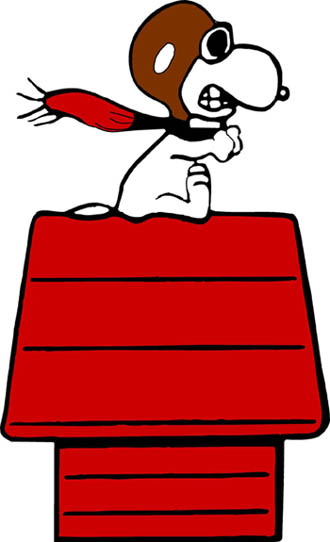
By CosmicConservativeSo today is the 59th anniversary of "Peanuts", the eternal comic strip created by Charles "Sparky" Schulz. The character portrayed below did not appear in the first strip, but eventually "Snoopy" the "pet" dog of Charlie Brown, became the main character of the strip for all practical purposes.
 I have mixed feelings about "Peanuts". By the time I was born, "Peanuts" was in it's ninth year, and by the time I started critically examining the cultural impact of comic strips, "Peanuts" was well into its third decade and had come to represent comic strip bourgeoisie.
That was not how Peanuts started though. Peanuts erupted on the scene when "Li'l Abner" and "Blondie" were the comic strip standards. The minimalist drawing style and the surrealistic adventures of Charlie and Sally Brown, Lucy and Linus Van Pelt, Schroeder, Peppermint Pattie, Snoopy and the rest were a wake-up call for the comic strip industry.
It is easy today to look at Peanuts as some tired, old, traditional comic strip. But that is to ignore it's cultural and artistic impact, and to overlook the way the strip reflected the times.
There were other strips that pushed the traditional boundaries of comic strips. B.C. is a good example, as is, perhaps, Beetle Bailey. But nothing captured the imagination of post WWII readers like Charlie Brown's never-ending battles with the kite-eating tree, opposing Little League baseball teams and Lucy Van Pelt.
But Snoopy was something altogether new. Snoopy allowed the strip to transcend all comic strip limitations. Strips of Snoopy flying his "Sopwith Camel" doghouse against the Red Baron, or meandering around campus as "Joe Cool" represented a new opportunity for strips to completely disregard all of the normal boundaries of characterization and story arcs. Snoopy allowed Charles Schulz to leave Charlie Brown and his pre-pubescent entourage behind and explore cultural issues well beyond what a child-based comic strip could do.
There is a genius in "Peanuts" that is easily overlooked these days, as it has become a fixture in our lives as strips are reprinted from decades ago. This gives the appearance of stale, irrelevancy to the strip. But during the 60s, "Peanuts" was as relevant as any cultural artifact.
I have a lot of old Peanuts collections in my stack of paperback comic strip books. I have to admit that I was never really a big "Peanuts" fan. I was generally much more into "Pogo" or "Li'l Abner" when I was a kid, and as I reached young adulthood, I found Doonesbury to be the best strip for dealing with cultural issues. It's sad to see what Doonesbury has become, but in the late 60s and 70s, Garry Trudeau was as witty and relevant as any cultural figure on the scene.
But I always read "Peanuts" and there were many gems buried in the piles of mundane rocks that Schulz turned out every day. It took me many years to appreciate how "Peanuts" transformed the landscape of comic strips.
The other day I saw a commercial from some insurance company that has appropriated Snoopy as one of its icons. Snoopy was flying around on the screen, but it wasn't Snoopy, because Snoopy didn't fly an actual Sopwith Camel, Snoopy flew his doghouse. I couldn't help but think how Charles Schulz would be spinning in his grave if he knew some advertising agency had Snoopy flying an actual biplane. That would ruin the whole Snoopy paradigm.
Snoopy's flying doghouse was the clue Schulz gave his readers that he had left the staid, traditional world of "Peanuts" behind and was entering a new dimension where imagination and a sort of melancholy nostalgia had combined to allow Schulz to speak of a different time, and a different world, where chivalry in the skies was practiced, and the horrors of war could be contemplated with Bill Maudlin and a cold root beer.
Rest in Peace Sparky. The world is a better place for your contribution.
I have mixed feelings about "Peanuts". By the time I was born, "Peanuts" was in it's ninth year, and by the time I started critically examining the cultural impact of comic strips, "Peanuts" was well into its third decade and had come to represent comic strip bourgeoisie.
That was not how Peanuts started though. Peanuts erupted on the scene when "Li'l Abner" and "Blondie" were the comic strip standards. The minimalist drawing style and the surrealistic adventures of Charlie and Sally Brown, Lucy and Linus Van Pelt, Schroeder, Peppermint Pattie, Snoopy and the rest were a wake-up call for the comic strip industry.
It is easy today to look at Peanuts as some tired, old, traditional comic strip. But that is to ignore it's cultural and artistic impact, and to overlook the way the strip reflected the times.
There were other strips that pushed the traditional boundaries of comic strips. B.C. is a good example, as is, perhaps, Beetle Bailey. But nothing captured the imagination of post WWII readers like Charlie Brown's never-ending battles with the kite-eating tree, opposing Little League baseball teams and Lucy Van Pelt.
But Snoopy was something altogether new. Snoopy allowed the strip to transcend all comic strip limitations. Strips of Snoopy flying his "Sopwith Camel" doghouse against the Red Baron, or meandering around campus as "Joe Cool" represented a new opportunity for strips to completely disregard all of the normal boundaries of characterization and story arcs. Snoopy allowed Charles Schulz to leave Charlie Brown and his pre-pubescent entourage behind and explore cultural issues well beyond what a child-based comic strip could do.
There is a genius in "Peanuts" that is easily overlooked these days, as it has become a fixture in our lives as strips are reprinted from decades ago. This gives the appearance of stale, irrelevancy to the strip. But during the 60s, "Peanuts" was as relevant as any cultural artifact.
I have a lot of old Peanuts collections in my stack of paperback comic strip books. I have to admit that I was never really a big "Peanuts" fan. I was generally much more into "Pogo" or "Li'l Abner" when I was a kid, and as I reached young adulthood, I found Doonesbury to be the best strip for dealing with cultural issues. It's sad to see what Doonesbury has become, but in the late 60s and 70s, Garry Trudeau was as witty and relevant as any cultural figure on the scene.
But I always read "Peanuts" and there were many gems buried in the piles of mundane rocks that Schulz turned out every day. It took me many years to appreciate how "Peanuts" transformed the landscape of comic strips.
The other day I saw a commercial from some insurance company that has appropriated Snoopy as one of its icons. Snoopy was flying around on the screen, but it wasn't Snoopy, because Snoopy didn't fly an actual Sopwith Camel, Snoopy flew his doghouse. I couldn't help but think how Charles Schulz would be spinning in his grave if he knew some advertising agency had Snoopy flying an actual biplane. That would ruin the whole Snoopy paradigm.
Snoopy's flying doghouse was the clue Schulz gave his readers that he had left the staid, traditional world of "Peanuts" behind and was entering a new dimension where imagination and a sort of melancholy nostalgia had combined to allow Schulz to speak of a different time, and a different world, where chivalry in the skies was practiced, and the horrors of war could be contemplated with Bill Maudlin and a cold root beer.
Rest in Peace Sparky. The world is a better place for your contribution.Message for the Day
By CosmicConservative"Tranquility Base here, the Eagle has landed."
By CosmicConservative"Roger that, Tranquility. Copy you on the ground. You got a bunch of guys here about to turn blue, we can breathe again."
I probably didn't get that quote perfectly, but it's close to that. It wasn't for years afterward that I learned the significance of those words.
The whole "you got a bunch of guys down here about to turn blue" thing was not just clever repartee. Fuel monitoring of the Eagle lunar landing craft indicated that when they hit the ground, they had only a few seconds left of fuel, and if they had used it all up, they would have crashed into the lunar surface, most likely killing or at least stranding Neil Armstrong and Buzz Aldrin. Why was that?
Two things. First, while in their final descent to their planned landing spot, the computer which was supposed to handle the delicate landing process reported two errors indicating memory overloads. Armstrong asked mission control what to do and was told "that's OK" and to continue the landing. But that delay used up precious fuel. Then, the computer-selected location came into view and it was full of boulders. You can hear some of this on the audio recordings. At this point Neil Armstrong assumed manual control of the lunar lander, something that he was never supposed to do, although he trained for it. Balancing the lunar lander on its landing rocket, Neil then "flew" the lander forward, looking for a place to land. This continued for several seconds as the final fuel in the tank inched towards the "zero" mark. Finally, after a trip of a quarter of a million miles, Neil put the lander down with less than 30 seconds of fuel remaining.
That's why mission control was full of blue-faced engineers.
The engineer who reported "that's OK" on the computer glitch earned a congressional medal for doing so. At that moment, with a computer error on the computer screen, they were just seconds from scratching the landing and blasting back up to meet Michael Collins in the lunar orbiter and command module.
Medical technicians monitoring Neil Armstrong's heart rate, respiration and blood pressure said all were "off the scale" as he landed the Eagle. But you can't hear the slightest unease in his voice.
Neil Armstrong, to this day, says that his famous first words were corrupted by the radio connection. He intended to say, and believes he DID say "That's one small step for a man, one giant leap for mankind." Instead, whether due to his own error or due to an audio glitch, what it sounds like is "That's one small step for man, one giant leap for mankind."
I tend to give him the benefit of the doubt and blame it on an audio glitch.
Happy 40th anniversary of one of mankind's crowning achievements.