 I have mixed feelings about "Peanuts". By the time I was born, "Peanuts" was in it's ninth year, and by the time I started critically examining the cultural impact of comic strips, "Peanuts" was well into its third decade and had come to represent comic strip bourgeoisie.
That was not how Peanuts started though. Peanuts erupted on the scene when "Li'l Abner" and "Blondie" were the comic strip standards. The minimalist drawing style and the surrealistic adventures of Charlie and Sally Brown, Lucy and Linus Van Pelt, Schroeder, Peppermint Pattie, Snoopy and the rest were a wake-up call for the comic strip industry.
It is easy today to look at Peanuts as some tired, old, traditional comic strip. But that is to ignore it's cultural and artistic impact, and to overlook the way the strip reflected the times.
There were other strips that pushed the traditional boundaries of comic strips. B.C. is a good example, as is, perhaps, Beetle Bailey. But nothing captured the imagination of post WWII readers like Charlie Brown's never-ending battles with the kite-eating tree, opposing Little League baseball teams and Lucy Van Pelt.
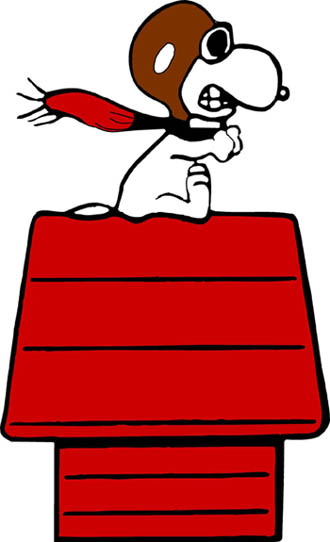
But Snoopy was something altogether new. Snoopy allowed the strip to transcend all comic strip limitations. Strips of Snoopy flying his "Sopwith Camel" doghouse against the Red Baron, or meandering around campus as "Joe Cool" represented a new opportunity for strips to completely disregard all of the normal boundaries of characterization and story arcs. Snoopy allowed Charles Schulz to leave Charlie Brown and his pre-pubescent entourage behind and explore cultural issues well beyond what a child-based comic strip could do.
There is a genius in "Peanuts" that is easily overlooked these days, as it has become a fixture in our lives as strips are reprinted from decades ago. This gives the appearance of stale, irrelevancy to the strip. But during the 60s, "Peanuts" was as relevant as any cultural artifact.
I have a lot of old Peanuts collections in my stack of paperback comic strip books. I have to admit that I was never really a big "Peanuts" fan. I was generally much more into "Pogo" or "Li'l Abner" when I was a kid, and as I reached young adulthood, I found Doonesbury to be the best strip for dealing with cultural issues. It's sad to see what Doonesbury has become, but in the late 60s and 70s, Garry Trudeau was as witty and relevant as any cultural figure on the scene.
But I always read "Peanuts" and there were many gems buried in the piles of mundane rocks that Schulz turned out every day. It took me many years to appreciate how "Peanuts" transformed the landscape of comic strips.
The other day I saw a commercial from some insurance company that has appropriated Snoopy as one of its icons. Snoopy was flying around on the screen, but it wasn't Snoopy, because Snoopy didn't fly an actual Sopwith Camel, Snoopy flew his doghouse. I couldn't help but think how Charles Schulz would be spinning in his grave if he knew some advertising agency had Snoopy flying an actual biplane. That would ruin the whole Snoopy paradigm.
Snoopy's flying doghouse was the clue Schulz gave his readers that he had left the staid, traditional world of "Peanuts" behind and was entering a new dimension where imagination and a sort of melancholy nostalgia had combined to allow Schulz to speak of a different time, and a different world, where chivalry in the skies was practiced, and the horrors of war could be contemplated with Bill Maudlin and a cold root beer.
Rest in Peace Sparky. The world is a better place for your contribution.
59 years of Peanuts
By CosmicConservativeSo today is the 59th anniversary of "Peanuts", the eternal comic strip created by Charles "Sparky" Schulz. The character portrayed below did not appear in the first strip, but eventually "Snoopy" the "pet" dog of Charlie Brown, became the main character of the strip for all practical purposes.
I have mixed feelings about "Peanuts". By the time I was born, "Peanuts" was in it's ninth year, and by the time I started critically examining the cultural impact of comic strips, "Peanuts" was well into its third decade and had come to represent comic strip bourgeoisie.
That was not how Peanuts started though. Peanuts erupted on the scene when "Li'l Abner" and "Blondie" were the comic strip standards. The minimalist drawing style and the surrealistic adventures of Charlie and Sally Brown, Lucy and Linus Van Pelt, Schroeder, Peppermint Pattie, Snoopy and the rest were a wake-up call for the comic strip industry.
It is easy today to look at Peanuts as some tired, old, traditional comic strip. But that is to ignore it's cultural and artistic impact, and to overlook the way the strip reflected the times.
There were other strips that pushed the traditional boundaries of comic strips. B.C. is a good example, as is, perhaps, Beetle Bailey. But nothing captured the imagination of post WWII readers like Charlie Brown's never-ending battles with the kite-eating tree, opposing Little League baseball teams and Lucy Van Pelt.
But Snoopy was something altogether new. Snoopy allowed the strip to transcend all comic strip limitations. Strips of Snoopy flying his "Sopwith Camel" doghouse against the Red Baron, or meandering around campus as "Joe Cool" represented a new opportunity for strips to completely disregard all of the normal boundaries of characterization and story arcs. Snoopy allowed Charles Schulz to leave Charlie Brown and his pre-pubescent entourage behind and explore cultural issues well beyond what a child-based comic strip could do.
There is a genius in "Peanuts" that is easily overlooked these days, as it has become a fixture in our lives as strips are reprinted from decades ago. This gives the appearance of stale, irrelevancy to the strip. But during the 60s, "Peanuts" was as relevant as any cultural artifact.
I have a lot of old Peanuts collections in my stack of paperback comic strip books. I have to admit that I was never really a big "Peanuts" fan. I was generally much more into "Pogo" or "Li'l Abner" when I was a kid, and as I reached young adulthood, I found Doonesbury to be the best strip for dealing with cultural issues. It's sad to see what Doonesbury has become, but in the late 60s and 70s, Garry Trudeau was as witty and relevant as any cultural figure on the scene.
But I always read "Peanuts" and there were many gems buried in the piles of mundane rocks that Schulz turned out every day. It took me many years to appreciate how "Peanuts" transformed the landscape of comic strips.
The other day I saw a commercial from some insurance company that has appropriated Snoopy as one of its icons. Snoopy was flying around on the screen, but it wasn't Snoopy, because Snoopy didn't fly an actual Sopwith Camel, Snoopy flew his doghouse. I couldn't help but think how Charles Schulz would be spinning in his grave if he knew some advertising agency had Snoopy flying an actual biplane. That would ruin the whole Snoopy paradigm.
Snoopy's flying doghouse was the clue Schulz gave his readers that he had left the staid, traditional world of "Peanuts" behind and was entering a new dimension where imagination and a sort of melancholy nostalgia had combined to allow Schulz to speak of a different time, and a different world, where chivalry in the skies was practiced, and the horrors of war could be contemplated with Bill Maudlin and a cold root beer.
Rest in Peace Sparky. The world is a better place for your contribution.
Comments (7)