Cosmic Conservative

Rational Conservatism from the heart of America

Living

Draconian diet imposition restored...

By CosmicConservative
OK, so I've been stuck between about 178 and 184 pounds now for months. No longer. Back on the 1,000 calorie or less per day diet. I'm gonna get down to 170 at the least, and 165 is my goal.

Rock and a hard place...

By CosmicConservative
So we want to move. We live in the mountains where home prices have been hammered even more than in the metro area. Our home is currently estimated to be worth roughly 10% less than when we bought it over eleven years ago. Yeah, so much for the whole concept of building wealth through home equity. Back when home prices actually were increasing, we foolishly refinanced in part to pay for our daughter's college (before we started just borrowing tons of money for that purpose). So our current equity position on the house is such that even if we could sell it for the general estimated value of the house, we would barely walk away with any cash at all. And of course we'll have to buy a new house with a paltry down payment. So my current outlook on the potential to complete the process of selling this house and moving is not looking very positive.

Co-existent species of man

By CosmicConservative
I think about this more than I should probabaly. In truth I'm fascinated by what we think we know about the history of the human genome. And this once plodding area of scientific study has become one of the more active and interesting areas of paleology, archaeology and the intersection of the two (sometimes called "paleo-archaeology"). Here's the thing... We think of the world today as being populated by a multitude of races of humans, which is true, but the overall differences between any two modern human races is far less, genetically, than the difference that occurs within a race itself. Or to put it another way, it's somewhat scientifically valid to challenge the idea of "races" at all. There are just local variations of one race, one species. That's especially true when you think of what modern science believes was the case just 50 - 100,000 years ago. Or, you could argue, all the way back to perhaps two million years ago. In other words, through the vast majority of the existence of the human race. It is generally known, but rarely thought about, that modern humans (once called "cro-magnon man") co-existed with homo neandertalis, or "neanderthal man". I've posted on this before in one of my most popular posts, "The Truth About Trolls". In that post I argue that human culture has propogated the memory of life among neanderthals as stories and myths about "trolls". I firmly believe this to be true. But the latest discoveries in the field indicate that for most of human existence there have been as many as six different "human" species, and that the neanderthals were perhaps the closest to modern human of them all. (In fact modern human DNA contains roughly 2.5% of Neanderthal DNA.) Since neanderthals were closer to humans than most of the other species, it stands to reason that the other species were even more "alien" looking than neanderthals (which does not seem to have stopped humans from interbreeding with some of them). One co-existant group was the recently discovered "hobbit" species of three foot tall humanoids who lived off the coast of southeast Asia up to 17,000 years ago. That's pretty recent, almost reaching historical times. So consider that at one point in human history, well after humans had established domestication of animals and begun primitive agriculture, and in some cases had even begun to aggregate in large communities and build large structures, humans could have interacted with as many as five different humanoid species. Since at least two, and potentially three, of those contributed to modern DNA, this interaction included sexual activity so it's fair to assume that it probably involved trade of some sort. I am seriously thinking about writing a book set in those times. Of course it would be almost entirely speculative since of those different species we only know the morphology of two of them (neanderthals and hobbits) and we know virtually nothing about their culture (but we know they all made and used tools and wore jewelry), but still, this isn't fantasy, these species truly co-existed and interacted with each other. At one time this planet had multiple "intelligent" species on it.

I'm guessing William Macy will play the Captain in the movie...

By CosmicConservative

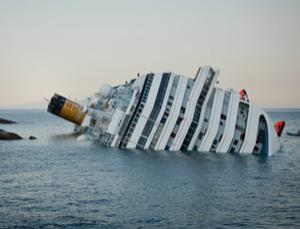
One of Europe's largest cruise ships, the Costa Concordia, carrying 4200 passengers and crew, suffered a fatal and spectacular accident on Saturday. The vessel was holed on rocks off the Italian island of Giglio – and then quickly keeled over, preventing lifeboats on its port side from being lowered and trapping some passengers and crew in the bowels of the ship. At 12:00 GMT today, six people had been confirmed dead and a further 15 were missing. So how stable and safe are these vertiginous floating multistorey hotels?

via How stable are cruise ships like the Costa Concordia? - tech - 16 January 2012 - New Scientist.

This is the sort of story that I get fascinated by. Everything about this story flies in the face of what should happen. That ship should never have been that close to shore. That shore should have impeccably accurate GPS mapping. That ship should have the latest state-of-the-art sonar mapping. The ship should never have listed so badly so quickly. The Captain should never have abandoned his ship, crew and passengers to chaos and panic. How could so many terrible things go so badly wrong in so short a time? Then I look at the pictures and the ship is just meters off the shore, and eleven people died? Maybe more? Maybe Rosie O'Donnell will play the Captain.

More planets than stars in Milky Way

By CosmicConservative
This isn't really news to most folks who have paid any attention to astronomy or cosmology. It's more of a confirmation of what most experts have suspected for a couple generations now, ever since the stellar lifecycle models were proposed and passed most reasonable observational tests.
WASHINGTON (AP) — The more astronomers look for other worlds, the more they find that it is a crowded and crazy cosmos. They think planets easily outnumber stars in our galaxy and they are even finding them in the strangest of places. And they have only begun to count. Three studies released Wednesday, in the journal Nature and at the American Astronomical Society's conference in Austin, Texas, demonstrate an extrasolar real estate boom. One study shows that in our Milky Way, most stars have planets. And since there are a lot of stars in our galaxy — about 100 billion — that means a lot of planets.
It is nice to see this public acknowledgement that planets are common in the Milky Way (probably well over a trillion planets just orbiting stars. Who knows how many "rogue planets" are roaming around in interstellar space. By some estimates that number might even be bigger than the number of star orbiting planets.) However, even through the filter of crappy science reporting, there's still something that I've never seen addressed in any story about planets, and that's the vastly increased likelihood of earth-like bodies capable of supporting life. See, the thing is that the stellar lifecycle models don't just predict that most stars probaby have a dozen or so planets (like our own system) but that a large fraction of those planets are gas giants. And that is what we are seeing when we find planets orbiting other stars. What did surprise cosmologists and astronomers when the first observational confirmation of planets orbiting other stars came in was how many of these gas giant planets are in close orbit to their stars. The assumption was that most stellar systems would resemble our own solar system, with rocky small planets close to the star and larger gas giants further out. That doesn't seem to be the case though, at least so far. The majority of systems we see have large gas giant planets in orbits more like Mercury, Venus or Earth. So of course the idiots who call themselves science reporters bemoan that those planets are not "earth-like" and therefore are not candidates for looking for "alien" life. But nothing could be further from the truth. See, the stellar lifecycle models don't just predict that stars have planetary systems. They also predict that gas giants have moon systems, and that those moons can be equal in size to what we think of as planets. So for every gas giant that is in close orbit to its sun, there is a fairly high probability that "hot Jupiter" has a collection of moons that could easily be the size of Mercury, Mars or even Earth. Using our own solar system as a model, we have eight acknowledged "planets". However those eight planets have over a hundred moons, and at least eight of those moons would qualify as planets if they were in orbit around the sun by themselves. So that means we should essentially not only DOUBLE the estimate of the number of possible life-supporting objects, we should actually QUADRUPLE that estimate since virtually all such "moons" are rocky bodies more resembling earth than gaseous bodies resembling Jupiter or Uranus. So if half of the trillion or so "planets" now estimated to be in stellar orbits are gas giants, then there are likely TWO trillion planetary-sized objects with earth-like composition. How many of those would be in the Goldilocks zone? Meaning how many would there be where water could exist in a liquid state on the surface? Well, that's still a guess, but based on what I've seen from the data so far, probably five percent of the planets discovered so far would be in that zone, but the vast majority of them are "hot Jupiter" type objects. By the way, that's not necessarily because most planets in their star's "goldilocks zone" are gas giants, that's basically because our planet-detection process is still far more likely to find massive bodies in close orbit to stars than smaller bodies, or massive bodies in larger orbits. Anyway, just throwing my own personal guess at things, I would guess that most stars have SOMETHING orbiting in their goldilocks zone. Some of those objects will be earth-like planets, some will be asteroid-like bodies and some will be gas giants with their own collection of moons. So my guess is that there's likely to be a near one-to-one relationship between stars and rocky bodies capable of having liquid water on their surface. Which puts the total number of such bodies into the hundreds of billions in our galaxy alone. Now, if we plug that into the Drake Equation, that vastly increases the odds of there being alien life in our galaxy, which would therefore greatly increase the odds that there is intelligent life in the galaxy, which then greatly increases the odds that there are technologically advanced beings in our galaxy.... But then that takes us right to the Fermi paradox. "Where the hell are they then?" By the way, using the standard of a potential life-supporting body being something large enough to have differentiated its composition and that composition being mainly of "rock", our solar system has 27 such bodies currently known. Two of them orbit in the Goldilocks zone today. Mars and Venus are both right on the edge of that zone, and in the past and future both of them have been or will be in the Goldilocks zone. That means our solar system has four bodies that would merit close examination as potential life-bearing bodies if we were to be examined from some other vantage point outside our own solar system. Four. I'm guessing that might be a pretty common number of potentially life-bearing planets for most stars. That means that roughly 15% of bodies of earth-like composition with reasonable surface gravity in our solar system are, have been or will be in the "Goldilocks zone" of our own star. That would mean if there are two trillion such objects in the galaxy, and our solar system can be used as a model, there should be roughly 300 BILLION Goldilocks zone inhabiting earth-like bodies in the galaxy. My personal guess is that life is actually pretty common in the galaxy.
Moonshot

By CosmicConservative
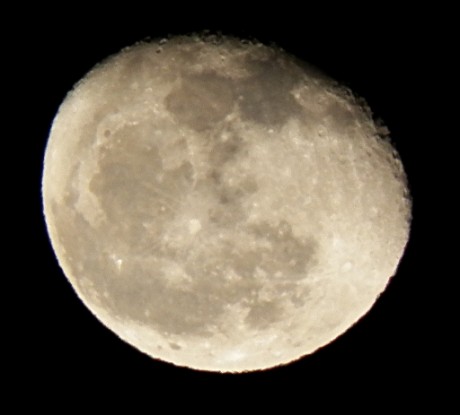
So I finally figured out how to use my camera's program modes and manual focusing capability. Or mostly anyway. This is a photo of the moon I took. It was too cold to mess around much, so I only took three photos (it isn't really easy to reset shutter speed or manually focus this thing, I'm afraid to say... but you CAN do it). It's not quite terrible, you can make out some features, but it's clearly not perfectly focused or exposed. I'll try again. I also want to try stacking photos using some open source stacking software called "Registack". That is supposed to allow you to get more detail by combining data from multiple images. Haven't figured that out though... And it's late, so I'm going to bed. I actually scaled it down from it's original size. The raw image had the moon in a roughly 800 by 800 pixel area. That's pretty good actually, for a cheap point and shoot camera...
Weight loss...

By CosmicConservative
So, I'm a bit more than one year into my "new lifestyle" to control my weight. I am still wearing size 32 pants, so I'm doing pretty good, although my weight has crept up a few unwanted pounds in the past few months (most likely due to loss of focus during the holiday season). So because of that I've been doing some reading on weight loss. And although what I am finding is not surprising or really even new, the tone and approach to the discussion on weight loss does seem to be changing a bit. Essentially it appears that folks who are trying to lose 15 - 30 pounds typically can keep the weight off for 12 - 18 months, but less than 5% of study participants keep it off longer than that. People who lose more than 30 pounds tend to not only regain the weight much faster, but they also tend to end up gaining MORE weight after dieting and end up MORE obese than they started. There has been a lot of work done on the human metabolism's response to dieting. And that's where all the really interesting research seems to be right now. More and more the weight-loss scientists are saying that losing weight itself isn't that hard, but KEEPING IT OFF is about as close to impossible as a human endeavor can be. In essence NOBODY keeps weight off for more than a few years at most. NOBODY. Even the "less than five percent" figure that is frequently cited by long-term studies is skewed because it doesn't include those who drop out of the long term studies themselves. And would you like to guess who is most likely to drop out of a long-term study on weight loss? I'm guessing it's not the folks who are happily skinny for the rest of their lives. So that means the actual number of folks who lose any significant amount of weight and keep it off PERMANENTLY is probably in the 1% range. Or less. Now, that actually meets my own experience. I really only know one person who I know lost over 30 pounds and has kept it off for three years now. One person. Everyone else I know who lost 15 - 30 pounds (or more) has easily put that much back on since their weight loss. Why is that? Well, my guess is that it's simply mentally, emotionally and intellectually exhausting to maintain weight loss if you've been heavy. I was reading a story about how one person managed to keep their weight down for five years, and the reporter who interviewed the person was astonished at what that person did to maintain their weight, which included: - Weighing themselves EVERY SINGLE DAY (I do this) - Counting EVERY SINGLE CALORIE (if I don't do this, I gain weight) - Treating high-carbohydrate foods like drugs (I also do this) - Exercising diligently for up to two hours per day (I don't do this) - Tracking every activity to count calorie burn rates (I don't do this) - Ensuring that at least 1/3 of calories are protien (I do this) In summary, the effort required by this individual to keep their weight off is a NEVER-ENDING focus on quite literally EVERY MORSEL OF FOOD they put in their mouth, while monitoring EVERY SINGLE ACTIVITY to calculate caloric input and output. Doing this the individual interviewed is able to maintain their weight. However, if there is the slightest deviation from this regimen, the weight goes back on and losing it requires draconian caloric starvation to get the weight back down. Now, a year ago, when I started this "lifestyle change" thing, I sort of assumed that I would develop new habits and that eventually I'd just adopt a new "food and exercise norm". But that hasn't been the case. Twelve months into it, I also have to literally watch EVERY SINGLE MORSEL of food if I want to maintain my weight. In two months, just by relaxing a bit to enjoy some holiday meals and snack on some holiday cookies, I've put back on ten pounds, and now I am having to crack down hard again to lose that weight again. It appears that this will be the case for the rest of my life. Or that's what the research seems to indicate. So, will I be able to be in the presumed "less than one percent" of folks who lose weight and keep it off? I'm gonna give it hell.

The most insane waste of time ever?

By CosmicConservative
Forget leap years, months with 28 days and your birthday falling on a different day of the week each year. Researchers at Johns Hopkins University in Maryland say they have a better way to mark time: a new calendar in which every year is identical to the one before. Their proposed calendar overhaul — largely unprecedented in the 430 years since Pope Gregory XIII instituted the Gregorian calendar we still use today — would divvy out months and weeks so that every calendar date would always fall on the same day of the week. Christmas, for example, would forever come on a Sunday. Read more:
You would think this has to be a hoax...

Superzoom Kodak Easyshare Max Z990

By CosmicConservative
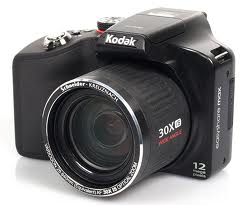
Since my birthday and Christmas are so close together, I tend to get one nice gift and then smaller ones during the season. Which is fine with me. This year the big present was the Kodak Easyshare Max Z990 camera, which is in the new category of "superzoom" digital cameras. Here's a pic of it: As you can see, it's not a little pocket point-and-shoot. That's because the superzoom functionality requires a big-ass lens, which greatly limits how small the camera itself can be. The zoom ranges from 28mm f2.8 - 840mm f5.6 in 35mm equivalency. Yes, 840mm f5.6. If that's accurate, this camera replicates the ability of Nikon lenses I used to look at that used to cost thousands of dollars. An f2.8 300mm lens alone used to cost over $3,000. Plus the camera has image stabilization. What does that sort of zooming look like? Well, here's a photo I took in my living room with the zoom set to widest angle (no zooming). (I cropped off the bottom half since my wife didn't want her photo blasted on my blog...) Here's a photo I took fully zoomed in, handheld (not on a tripod). So far I love this camera. It has the added feature of using a front-capture CMOS sensor, which means it is supposed to be far more light-sensitive than standard digital camera CCD sensors. I'm not going to go into the difference between CCD and CMOS here, but from my understanding of the technology, a CMOS sensor should be more light sensitive than a CCD one. And this camera is supposed to demonstrate that. I wanted to take a photo of the moon as an example, but hey, no moon tonight. Not yet anyway. Pretty neat camera. I'm using it for all my gaming blog photos now.


Why does the NFL play on Christmas week?

By CosmicConservative
Every. Single. Game. If I was interested in a game, it went the wrong way. Tebow erased most of a year's excellent play in one game. Even the Cowboys lost and Romo probably broke his hand. Merry Christmas from the NFL... :)