The story is typical "Wired" pseudo-geek pablum, poorly written, poorly researched and poorly edited, but that's become Wired's standard editorial style. The actual data behind the story is interesting though, basically it shows that the iPad, unlike virtually all other Apple product releases, appeals to older business-oriented folks, and is less appealing to younger internet-savvy "tweenies" which has traditionally been Apple's target market for their new toys. To put it another way, based on this analysis, if you asked the two famous "I'm a Mac" and "I'm a PC" characters from Apple's commercials about the iPad, the "I'm a PC" dude would be much more likely to go "oooh, I want one!" than the "I'm a Mac" dude. My reaction to the iPad is a very distinct "meh". I've been messing around with various computer "pads" for years. I was an original Palm user and an original Apple Newton user. I still think the Newton was decades ahead of its time, and mine still works. The writing recognition on the Newton is simply phenomenal. I've owned a series of Palm devices and currently own a Droid and a Blackberry ("own" here somewhat blurring the lines between things I purchased myself, and things my company has purchased for me, but which I use daily). My son has an iPod Touch and one of the new Droid Jr. phones. Plus I've owned a veritable menagerie of laptops. I like the concept of the iPad, but I don't think such a device will really catch the imagination of the general public until they have screens which don't require battery-hogging fluorescent or LED backlights and provide vibrant color with a reflective surface much like the Kindle and other readers provide. That technology exists with the organic LEDs being produced in Japan, but right now large pad-sized screens are prohibitively expensive. But projections are that those costs will eventually be comparable to, or even less than, current LED screen technology. I figure in three years we'll start to see the decline of the PC as third generation "pad" devices start to make traditional desktop and laptop computers obsolete.Consumer research firm MyType conducted the study, in which opinions of 20,000 people were analyzed between March and May. The firm’s conclusion was that iPad owners tend to be wealthy, sophisticated, highly educated and disproportionately interested in business and finance, while they scored terribly in the areas of altruism and kindness. In other words, “selfish elites.”
Read More http://www.wired.com/epicenter/2010/07/ipad-owner-are-selfish-elites-critics-are-independent-geeks-says-study/#ixzz0v58XXcS2
Science & Technology
Moon gazing...
By CosmicConservativeDrones in National Parks...
By CosmicConservativeIt won't be long before tiny, nearly invisible and whisper quiet cameras are flitting about overhead all over the world. All for your own good, of course.THE US military's uncrewed aerial vehicles are a critical component of its search-and-destroy missions in warring regions. But could UAVs instead be used to save lives by flying search-and-rescue (SAR) missions in the nation's large national parks?
Michael Goodrich, Lanny Lin and colleagues at Brigham Young University in Provo, Utah, took a commercially available propeller-driven plane with a 1.2-metre wingspan, optimised for low-speed flight, and adapted it to both fly and search autonomously. Their idea is to provide SAR teams with a cheap alternative to helicopters, and one that can be used even in the perilous weather conditions that can ground helicopter-led rescue missions.
Without any piloting experience, an SAR operator can direct the plane to an area they want to search by clicking way-points on a computerised map, Goodrich says. The craft can also work autonomously to conduct search missions even if it is fed less specific information, such as a missing person's last known position. To do so it uses computerised maps of the area to analyse the terrain and relies on probabilistic models to work out the missing person's most likely routes.
The future's so bright...
By CosmicConservativeThe State of Physics illustrated
By CosmicConservative"Accordingly, our own Universe may be the interior of a black hole existing in another universe." So concludes Nikodem Poplawski at Indiana University in a remarkable paper about the nature of space and the origin of time. The idea that new universes can be created inside black holes and that our own may have originated in this way has been the raw fodder of science fiction for many years. But a proper scientific derivation of the notion has never emerged. via Technology Review: Blogs: arXiv blog: Why Our Universe Must Have Been Born Inside a Black Hole.The real action is in the comments. You can sense the frustration of the commentators who see, as I do, that physics has become a realm where virtually any bizarre "theory" gains instant credibility so long as it pays proper homage to the current physics shibboleths and criticisms of those "theories" are discounted as "crackpot" or worse if they do not pay proper homage to them. The first time I encountered the concept of black holes containing a "singularity" which is usually defined as "infinitely dense" I knew that physics was losing its way. That way has led to 50 years of mental masturbation known as "String Theory" and out of that has come all manner of speculation masquerading as "theory." Physics is in a world of hurt. I think it's going to take a literal revolution in the ranks, or a complete expulsion from those parts of science that still have some connection with reality to fix it. One of the commenters here says the problem goes all the way back to Einstein, but I don't think that's fair. Einstein himself pointed out that his theories were not comprehensive and that there were serious problems with "continuity" and with reconciling the smoothness of relativity with the chaos of quantum mechanics. Einstein knew we were merely on the cusp of understanding. It's not his fault if an "Einstein cult" has grown up which has taken physics in directions that Einstein himself would not approve of. I think perhaps the revolution in physics might just occur after the "Higgs Boson" search reaches its climax. When the result of that "experiment" ends up with inconclusive results which do nothing to "prove" any current physics theory and merely open the door to more speculation, there may well be an economic revolt due to the massive amounts of public money spent on a pursuit that has provided exactly zero results after trillions of dollars spent and entire generations of physicists devoting their lives to no effect. We will see.
Peak Oil news
By CosmicConservativeScientists working for the US Geological Survey say Venezuela's Orinoco belt region holds twice as much petroleum as previously thought. The geologists estimate the area could yield more than 500bn barrels of crude oil. via BBC News - Venezuela oil 'may double Saudi Arabia'.Every time there's a flurry in the news about "peak oil" there is almost simultaneously an announcement of vast new reserves of oil and/or natural gas being found. Too bad this had to be found in Venezuela though... And remember, we have not yet begun to explore or drill in the arctic or antarctic, nor have we allowed vast reserves known to exist in America to be drilled. We will eventually run out of oil, but not nearly as soon as the "Peak Oil" alarmists want us to.
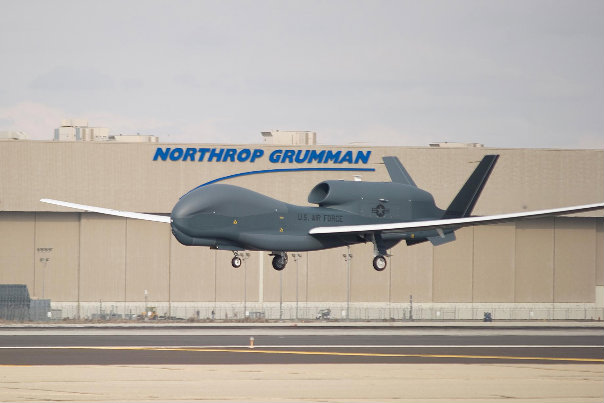
Drones in the US arsenal
By CosmicConservative
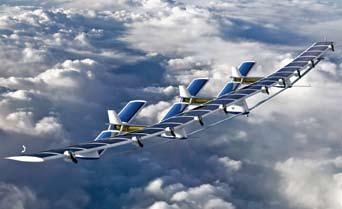
The "Vulture" is the military's version of NASA's famous "Condor" experimental plane that could stay aloft for weeks. The Vulture will operate as a sort of blend of a reconnaissance satellite and a spyplane. It's mission is to stay aloft over critical sensitive areas for days or weeks while taking photos and capturing electronics intel. It doesn't look imposing, but it will fly so high and has such a tiny radar cross section that they can be stationed just about anywhere. These are not "officially" active duty, but I would be very surprised if the USA doesn't already have several of these in operation.
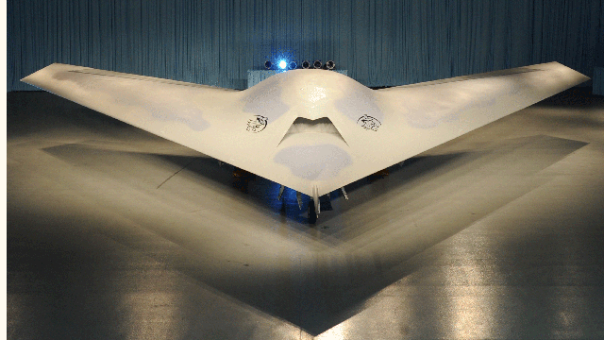
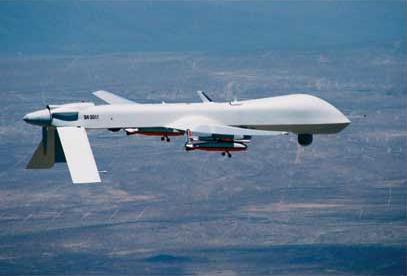
The "Finder" is an intriguing extension of the drone concept. Basically it's a drone's drone. Attached to a larger drone like the current Predator or Reaper, or the upcoming Phantom Ray, it will detach from the "mother ship" to fly under low clouds or smoke from a battlefield and relay it's images back through the larger drone and back to the intelligence gathering folks. No idea how many of these a drone can hold, but I suspect it's several. Really cool idea because it extends the effectiveness of the larger drones and provides targeting data for strikes from missiles on the larger drone. You have to look below the wing to see the "Finder". It looks tiny here, but it's five and a half feet long.
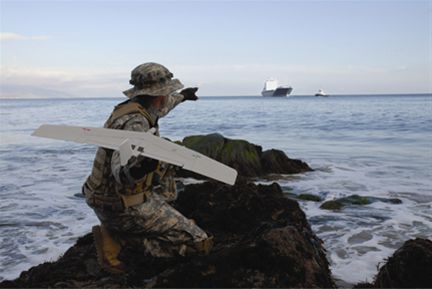
Supposedly virtually every unit in Afghanistan has at least one of these "Raven" drones. They are obviously short range and provide only recon abilities, but they are cheap, plentiful and give us a major edge in battlefield tactics.
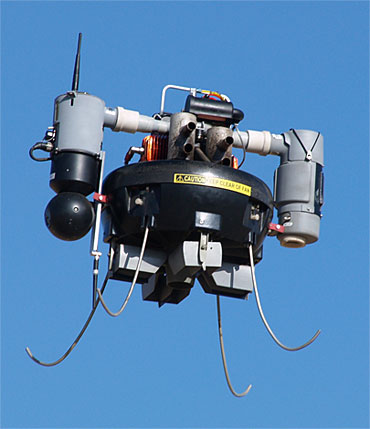
This is called the "T Hawk" and I didn't even know it existed, but it's in service now and provides a camera and intel platform that can go up to 10,000 feet and hover in place for hours. Pretty cool.
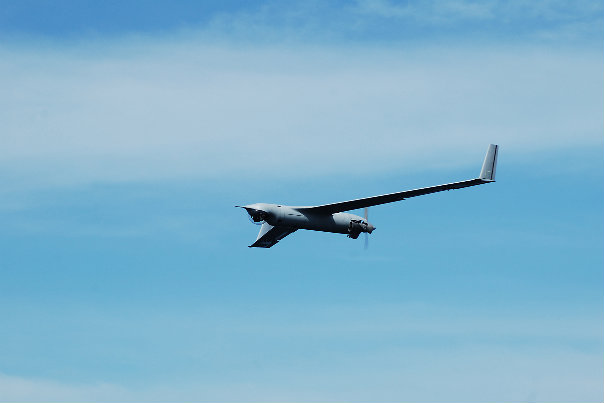
Launched from ships at sea, the ScanEagle provides an extended view of the open sea around US ship formations. I don't think it has any munitions on it, but I could be wrong. I believe this is retrieved by flying it into a net.
Another hand-launched drone, the "Wasp" is used by the Special Forces for reconnaissance. I bet most in actual use are painted black.
That's not nearly a complete list, I got these pictures off of a Fox slideshow they put up with the announcement of Boeing's "Phantom Ray" debut. Drones are already integral to USA battle tactics and the drone invasion has only just begun.Britain unveils unmanned jet drone weapon
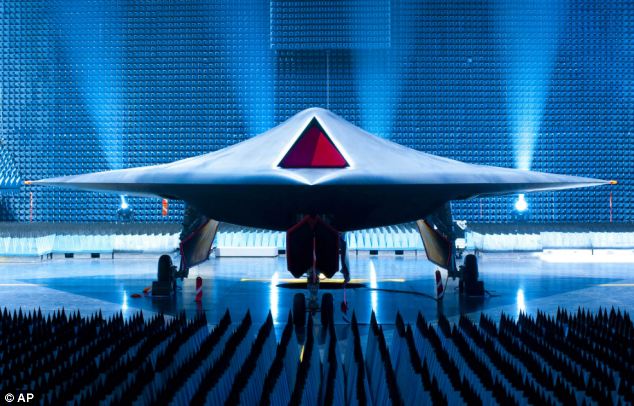
By CosmicConservativeLooming ominously like a space ship from Star Wars, this is the future of unmanned flight. Defence firm BAE Systems today officially unveiled its first ever high-tech unmanned stealth jet. The Taranis, named after the Celtic god of thunder, is about the same size as a Hawk jet and is equipped with stealth equipment and an "autonomous" artificial intelligence system. The plane will test the possibility of developing the first ever autonomous stealthy Unmanned Combat Air Vehicle (UCAV) that would ultimately be capable of precisely striking targets at long range, even in another continent. via Taranis: The £143million unmanned stealth jet that will be hit targets in another continent | Mail Online.
This is an example of what I've been predicting for years. As with all technology, these autonomous stealthy weapons platforms will continue to shrink in size and cost, while they expand in capability. I have no doubt that there are already dozens of these in service for the USA, and my guess is that within a few decades we'll see these autonomous unmanned craft outnumber manned fighters and bombers.
Whether this is a "good thing" or not remains to be seen, but I also am quite certain that US and NATO military strategy is already being rewritten around the use of these drones.
And remember, I predicted similar autonomous drones on the ground and in the sea. My guess is that in fifty years most military deployments will be done with manned "carrier" craft which deploy hundreds of armed, surveillance and "AWACS" style craft. Once these become commonplace in the military, the side with the fastest communication between the drone and the controller will win. Which is why full autonomous operation will be the holy grail of military technology within fifty years.
Skynet anyone?