OK, so I've admitted here before that among my geeky activities is that I engage in tabletop role playing games. I've played Dungeons and Dragons off and on since the early 80s when my brother ("Drax" here) re-introduced me to it when he returned from doing a stint in the US Navy. (I had played a bit in the early days pre-second edition, but not much).
I love the game, pretty much unreservedly and unabashedly. It's a great game, and I'm a game aficionado of the first order. I love all kinds of games from card games to table top games to computer games. Of all the games I've played though, table-top role-playing games are the most challenging, complex and rewarding, when done well. It is unfortunately true though that they can be done badly.
My initial experiences in D&D were with the first "mainstream" release of the game, now called the "black box" version, if I recall. In those days the game was fairly limited and constrained, but still it was a new "thing" for me and the opportunity to create entire worlds and roam around in them was just too much fun. Soon after that came the "Advanced D&D" version, also known as "Second Edition" which was the first really comprehensive version of the game, and was published primarily as a set of books calld the "Dungeon Master's Guide" the "Player's Handbook" and the "Monster Manual." Every version since has been built around these three "core" books, usually referred to as the "DMG" the "PHB" and the "MM".
Up through the various modifications and add-ons to second edition, the game was fully human-centric, with only human characters being allowed to advance to the upper tiers of the game. This was by design, but it frustrated a lot of players who felt that it was a bit of species bigoting and there was no reason in a fantasy setting that an elf shouldn't be every bit as powerful as a human. Also the various rules around combat, dialog and traps had developed sort of organically and as such had completely different rules mechanics around them. This made the game somewhat challenging to master since in some cases you needed to roll a high result to do well, while in other, similar, situations, you need to roll a low result.
All of that led to the first really major rewrite of the rules when the "Third edition" for D&D came out. Gone were the "racial" limitations (the game uses "race" to mean "species" of intelligent beings. "Elf" is a "race" for example) which limited non-humans to second-class status. In fact the various racial options were embraced and blended into the overall game experience so that choosing a race became part of the overall "flavor" of the character you wanted to play. This was accomplished by having "racial attributes" defined for each race which provided benefits and deficits to make each race different, but still (mostly) balanced. (In my opinion dwarves are overpowered in third edition). Third edition also introduced several new character building concepts such as "feats" and "skills." This provided a means to custom build your character according to guidelines that were intended to allow for powerful, interesting characters, without arbitrary game-changing decisions being necessary. (In second edition there were no fundamental rules to deal with a player who decided his character could fight ambidextrously, which effectively made that character over-powered compared to traditional fighters).
Still, third edition was a bit clunky and had some major flaws, but those were mostly overcome with what is now regarded as the first fully fleshed out, flexible and comprehensive version of the game, the 3.5 version. The 3.5 version was incredibly diverse and allowed for the creation of wildly different characters, even allowing a player to play completely new and unique races and classes. It also introduced the concept of "epic" characters to deal with the game-changing aspect of higher level characters by providing new challenges and opportunities for characters which had essentially become superheroes or demigods.
I really enjoyed the 3.5 version of the game. That's the version I've mostly been playing for the past five years or so. Unfortunately I don't play enough to have any "epic" characters, but playing up to level 10 or so has been quite challenging and fun on its own. In fact I felt the game was pretty well complete and had no desire whatsoever for any new major changes in the rules. I invested in books and add-ons to the tune of a hundred bucks or so and expected to play that version pretty much from then on.
However, there was trouble in paradise. At levels nearing level 20 or above, characters became insanely overpowered by exploiting unintended synergies between different abilities of certain characters. There were ways to combine certain powers to effectively become omnipotent in game terms. Once people started figuring out how to create super-powerful characters, running high level dungeons became a frustrating exercise where individual game masters had to house rule spells and effects to keep higher level spell casters from simply overpowering everything in the game. In effect the game's greatest strength became it's greatest weakness. At the same time the role-playing genre exploded, with new games built around gamers playing vampires, or werewolves, or jedi knights or just about anything you can imagine started heavily intruding on the fundamental market that D&D had always owned. Add to that the explosion of online role playing games like World of Warcraft and Wizards of the Coast (which had purchased D&D to go along with their other fantasy games portfolio) decided that D&D was dying.
So they decided to completely revamp the game system, addressing the biggest concerns with the 3.5 version of the game.
The primary complaints in the 3.5 version of the game were around the spell-casters spell casting rules, and the unbalanced nature of the classes. The problem as it was perceived was that a wizard at low levels had very limited spell casting abiltities, and once his daily spells were cast, he became nothing but a very poor crossbow shooter wearing no armor. A fighter, on the other hand, could keep pounding away using his sword or bow with unlimited capacity to do damage. This situation reversed at higher levels where a fighter's melee combat became nearly irrelevent when compared to a wizard's ability to cast dozens of powerful spells, some of which could kill the most powerful monsters with nothing but a word. So at low levels the spell casters felt useless and bored while at high level the non spell casters felt like nothing but cannon fodder for the spell casters.
To "fix" that problem, in the 4e version of the game, all characters have roughly the same amount of combat potential in the form of at will, encounter and daily powers. Wizards no longer have a set of spells they gain each day and have to hoard to get through the day, they now had powers that were always usable, and other powers that would recharge after a fight (an "encounter" in D&D terms). Fighters gained special abilities that could be used in an encounter or daily which while not being "spells" were similar in effect. For example, a wizard might have a daily ability to cast "fireball" but the fighter would have some combat abilty to swing his weapon around in a circle hitting every enemy adjacent to him.
My first reaction to 4e was that it was too simplified when compared to 3.5e. The game mechanic was totally changed and it felt like there was no reason to play a spellcaster. In previous versions of the game, the dynamic forced a player to "suffer" with a spell-caster's low-level limitations to "earn" the high level benefits of being a spell-caster. It "felt" right to me that spell casters should dominate the upper levels of the game. The new fourth edition rules seemed to mimic the play of an online game like Everquest or WoW, which had gone to great lengths to keep different classes and races balanced from start to finish. In effect I pretty much decided that 4th edition was not my cup of tea.
But time goes on, and it turns out that it is hard to find a group that still plays 3.5 regularly. As with most things, people move on and adopt the new rules while older players stick with the old rules. (In D&D terminology, a player who adamantly refuses to play the new versions of the game is called a "grognard." There are grognards around who still insist on playing the first edition rules of the game, arguing that all subsequent editions have reduced the role-playing aspect of the game in favor of tactical battle simulations.) So a few weeks ago, I signed up for a 4e campaign just to see if I liked it. (OK, to be accurate, I had been running a 4e campaign for my regular group, but running a game is not the same thing as playing a character in the game. I wanted to experience the player side of things too).
Well, this past Sunday we had our first session. My biggest fear was that the game would feel too constrained and contrived, and that the role-playing would be subjugated entirely to the tactical battle simulations. I also thought the at-will, encounter and daily power thing would be confusing and also feel arbitrary.
I am pleased to say that I didn't feel that way at all during the game play. It was different, for sure, and there were things I missed from 3.5, but I was surprised to realize that there were some things I liked better in 4e. The main thing was the character balance was vastly improved compared to 3.5 games I've played. Every player is engaged in every round in every battle. In 3.5e my druid mostly hoards her spell-casting until there is a major battle because she has so few spells she can cast and they are so desperately needed in the major fights. In 4e you have your encounter and at will powers that you recharge anyway, so you may as well use them. This gives each battle more tactical options than in 3.5 where most of the real complex and interesting battles happen when you reach some final "boss" where everyone lets loose with all the spells and powers they've been saving all day. In 4e you get to use those even in minor random encounter battles. So there is much less of a "war of attrition" where the DM can coax a player into using up their major powers before the final encounter, or the players have a fight half an hour after waking up, and then decide that they can't go on before sleeping again.
I have to say I enjoyed it, but I was playing a melee ranger, a class that in 3.5e would have basically had just a few melee abilities that he would use over and over, while in 4e he has some interesting options to choose from. I'm still not sure how it would feel to play a spell-caster in 4e. But the ranger was a lot of fun. I can't say I'm "sold" on 4e, but I will say that most of my major concerns about the game have turned out to be overblown and in some cases, completely incorrect. I enjoyed it thoroughly and am looking forward to my next session in a few weeks.
School districts from Maryland to Texas are fielding angry complaints from parents opposed to President Barack Obama’s back-to-school address Tuesday – forcing districts to find ways to shield students from the speech as conservative opposition to Obama spills into the nation’s classrooms.
This is rather embarrassing to me as a conservative. I don't like Obama. I think Obama is dangerous, both by intent and by incompetence. I think he is actively working to demolish the key things that make America great.
But he's the freaking President for god's sake! If he wants to speak to school kids, let him speak! If you think he has any more chance to "convert" kids to marxism than the STUPID TEACHERS in the classroom, you are fooling yourself. All this does is make conservatives and Republicans look like panic-stricken paranoids, and it will inflame the charges of racism that are already rampant on the left and in the media (yeah, I know that's redundant).
There is likely to be a backlash from this where independents start swinging back towards Obama. Talk about shooting yourself in the foot.
So, the August recess is over and Washington is getting back to business.
I had predicted that Obama's Health Care initiative would be dead by now, his Cap and Trade initiative would be on life support and his approval ratings would be below the political Mendoza line (which is generally considred to be 50% approval rating).
If not for the death of Ted Kennedy, which ironically pumped some life into the Health Care debate, I think I would be completely proven to be accurate.
I still think it's just been delayed a few weeks to a month. Obama has already pulled the main provision in the bill that I opposed (the "public option"), and the scuttlebutt in Washington is that the bill is going to have to be redone from scratch and will likely end up with a few significant reforms for insurance (such as controls and mandates around "pre-existing conditions" and attempts to control the deliberate dropping of coverage for higher-risk groups). Cap and Trade has been pushed back to the end of the year, by which time I expect the public opposition to be so strong that the Senate won't pass it without serious revisions, although I still have hopes that it will be totally rejected.
Obama's approval is still dropping at a steady rate. I don't see any sign yet that he has hit bottom. The farther he drops, the more peevish and snippy he acts, which doesn't help at all. (Thank goodness.)
I continue to assert that Barack Obama is likely to be remembered as one of the worst Presidents in our entire history. So far, after six months, he's done nothing but reinforce that opinion.
No, "Afghanistan cut and run" is not a hot new dance craze. Nor is it the name of a quirky rock and roll band.
"Afghanistan cut and run" is what I believe Obama is currently planning as his "strategy" for dealing with Afghanistan.
Once that begins, Obama will have completed the return to pre-9/11 mindset trifecta:
1. Slash the defense budget
2. Rip the heart out of the intelligence community
3. Leave Afghanistan as a breeding ground for terrorist training.
And this will complete what I predicted on, oh, about 9/12/2001 when I said that within a decade the United States would have forgotten any lesson from 9/11 and would be just as vulnerable, if not more so, to a more devastating attack.
Welcome to Obamaland.
Yes, pretty soon Peter Parker, the Spectacular Spider Man, will be eating tea and crumpets with Mickey and Minnie Mouse. (So if both Mickey and Minnie are surnamed "Mouse" does that mean they are already married? Or are they siblings? Cousins? How does that work? And don't even get me started on the "Goofy is a dog but Mickey also owns a dog" creepy pseudo-slavery thing...)
LOS ANGELES (AP) - The Walt Disney Co. is buying Marvel Entertainment Inc. for $4 billion in cash and stock, bringing such characters as Iron Man and Spider-Man into the family of Mickey Mouse and WALL-E.
Under the deal, which was announced Monday and is expected to close by the end of the year, Disney will acquire the rights to 5,000 Marvel characters. Many of them, including the Fantastic Four and the X-Men, were co-created by the comic book legend Stan Lee.
Not sure exactly what to make of this. I can't say I'm seeing much of an upside to the Fantastic Four having a theme park in Orlando...
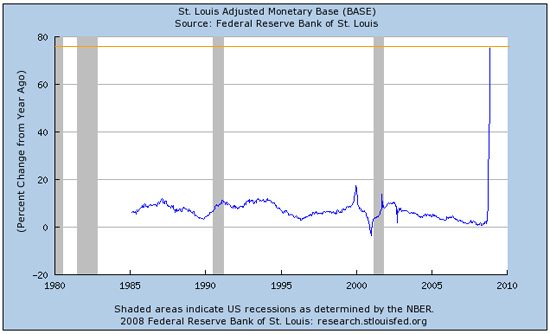 Anyone with an understanding of economics want to weigh in on what this means?
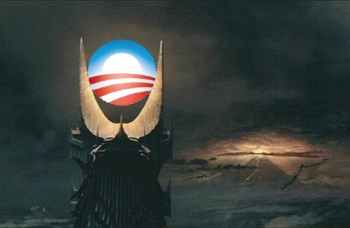 From IMAO