Well, sad in an immediate and emotional sense, but Ray Bradbury had a long, distinguished and successful career as an influential science fiction/fantasy writer. He was one of the first sci-fi writers I discovered and I found his lyrical prose and unique leaps of fantasy to be a welcome counterpoint to the regular writers in the genre. I never put Bradbury in my "top three" sci-fi writers (That was always Clarke, Asimov and Heinlein), but his unique voice was like a comfortable friend. I will echo Glenn Reynolds at Instapundit. Everyone remembers his Martian work or Fahrenheit 451, but I will always remember Dandelion Wine.R.I.P. Ray Bradbury, Author of Fahrenheit 451 and The Martian Chronicles.
Ray Bradbury — author of The Martian Chronicles, Fahrenheit 451, Something Wicked This Way Comes, and many more literary classics — died this morning in Los Angeles, at the age of 91. We've got confirmation from the family as well as his biographer, Sam Weller. His grandson, Danny Karapetian, shared these words with io9 about his grandfather's passing: "If I had to make any statement, it would be how much I love and miss him, and I look forward to hearing everyone's memories about him. He influenced so many artists, writers, teachers, scientists, and it's always really touching and comforting to hear their stories. Your stories. His legacy lives on in his monumental body of books, film, television and theater, but more importantly, in the minds and hearts of anyone who read him, because to read him was to know him. He was the biggest kid I know."
I think I'll have some Dandelion Wine tonight
By CosmicConservativeSad news.
 That's the sort of image I've been seeing on almost every page I visit now.
Of course the last person on earth who would need to wear spanx is that model...
 I try hard not to be catty about people's looks, and Lindsey Lohan does have a certain raw girl-next-door appeal in some cases, but look at that photo. What are they going to do? Digitally create an hourglass figure for her?
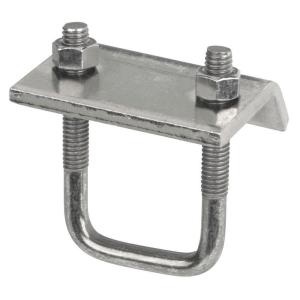 It's called a "beam clamp" and it is actually designed explicitly for the purpose of clamping a pipe onto the edge of a beam when you have very little overlap to work with. It's exactly what the commercial outrigger systems use. They cost about $4 each, so four of them would be $16 or so.
Also I discovered some metal flag pole holders that can be set at different angles.
And I also found some "crab pot floats" that are used for crabbing that might be ideal for the floats.
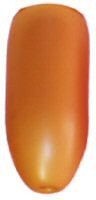 They cost about $9 each. Each one is about six inches in diameter and about 14 inches long. They may not be buoyant enough though. But the bigger ones are more expensive.
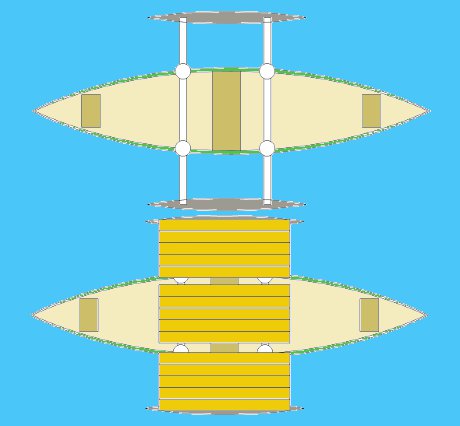 The top illustration is just the canoe with the outriggers. The outriggers themselves are dirt simple to understand. I figure two long aluminum tubes front and back, with 90 degree elbow joints at the end connected to some closed-cell foam elliptical floats. The aluminum tubes will be clamped, or even bolted, to the canoe gunwales. That means there would be aluminum poles going across the canoe, but nothing's perfect.
For simple stability that's really all there is. It's essentially a basic outrigger.
But the bottom illustration shows one thing you could do with the outriggers. This is just a simple set of thin wooden planks to create platforms port, starboard and amidships. Those platforms should be strong enough to hold people, meaning that you could relax on the platforms, or even stand on them to fish.
The whole thing should be simple to assemble, carry and attach, so the canoe could be used with or without the outriggers on a whim.
The only problem is that once you are in the water, you can't really reconfigure the canoe until you get back to shore.
Other possibilities are to have the outriggers hold storage bins and/or ice chests. Perhaps you could put the platform in the middle and one side and the other side could hold the ice chest and storage...
What do you think?
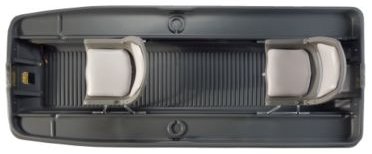 As you can see, it's a wide bottomed boat with the weight of the boat supported by "keels" along each side. It's designed to be able to sit high off the water or to cast while standing up. It's a very stable fishing platform.
But it's heavy, bulky and inefficient in the water. It's very difficult to paddle and wears out a trolling motor quickly. You can put a small outboard motor on them, but they are clumsy to use.
Still, they are perfect for tooling around in small lakes or ponds and fishing for bass or panfish. And I caught a lot of fish out of the one we used.
The point is that I never really spent much time in a canoe, and when I did, I mostly was just messing around and paddling from place to place. I had never used a trolling motor in a canoe, nor had I ever gone out into deep water on a large lake.
Well, after having spent an afternoon on the lake, and cruising across a significant chunk of deep, choppy water in our canoe, I've noticed several things that I think could bear some thought and potential modification.