Well, not quite yet.
But, I am dropping my model 41p Remington Targetmaster rifle off at a gunsmith today to tap the barrel for bolt holes to allow me to attach a scope.
I took it out shooting a couple of times and at 40 yards using the iron sights my old eyes just can't do what they used to do. I was able to put 17 of 18 shots within 3 inches of the center, but that's really not very good. You couldn't reliably kill squirrels with that sort of accuracy.
It's really sort of sad. I remember shooting 40 yards or more at squirrels and nailing them just about every time with this gun. It's not the gun. It's my eyes. I just can't focus with the iron sights like I used to. Even with my glasses I can't hold the sight on target.
I think I know why too. And it is definitely age related.
I used to be able to focus my eyes very precisely. Using iron sights on a rifle you have to be able to keep the front sight and the target in focus at the same time, or at least quickly adjust your focus from one to the other. I can't do that anymore. Now if I'm focused on the target, even with my glasses the front sight is a little blurry. If I focus on the front sight, the target is blurry. And if I try to focus on the front sight and then quickly focus on the target, by the time I refocus, the gun has shifted slightly.
I did some online research into shooting and age and this appears to be a relatively common thing that happens when shooters get into their forties and fifties. I see a whole lot of posts about shooters getting scopes for this reason.
That's because scopes focus both the target and the reticle in the same optical plane by design. That way you can keep a crisp view of the crosshairs superimposed on a crisp view of the target. Which I just can't do anymore with the iron sights.
So, off to the gunsmith. I dunno how long it will be before I get it back. I'm not going to buy an expensive scope, just about any scope will do I think. I'll probably end up spending less on the .22 scope, including the tapping of the barrel, than I spent on my Condor scope (which was $150 or so).
Man, this getting old sucks.
... always amazes me.
I've been continuing my descent into the minutia of the engineering and technical details of pellet guns and the assorted peripherals and paraphernalia associated with the hobby.
One of the things I have been digging into is the whole concept of air pressure regulators. If you have extreme high pressure air in a bottle, you might think that it would require a highly complex system to deliver air at, say, ambient air pressure.
But that's not the case. In fact it's pretty simple. The first air regulators were created back in the eighteenth century, right after the first industrial air compressors were created. Originally created to deliver air to miners underground, they were quickly adapted to underwater breathing. In fact the initial design of air pressure regulators was so simple and so effective that they remained essentially unchanged until Jacques Cousteau revolutionized underwater exploration with his "self-contained underwater breathing apparatus" which we now know as "scuba gear." Even then Cousteau's modifications were relatively trivial and may even have been accomplished before Cousteau by a contemporary of Cousteau's who was, unfortunately, killed in WWII.
So how does a regulator work? The simplest design is called a "one-stage regulator" and it essentially is nothing more than a small air reservoir attached directly to the high pressure air tank with a diaphragm on one side. The diaphragm is spring-loaded and is attached to a "poppet valve" which opens when the diaphragm is pushed TOWARD the high pressure tank, and closes when the diaphragm moves AWAY from the high pressure tank. A screw on the spring allows you to increase or decrease the load on the diaphragm so that more or less air enters the reservoir from the high pressure tank. A pressure gauge in the small reservoir tells you how much pressure it holds. Once you set the pressure using the screw, if you pull air out of the reservoir, the poppet valve will open, allowing more air from the high pressure tank, which will close the poppet valve.
It's sheer brilliance really. And dirt simple. And highly reliable to boot.
If you need even more precision in your air pressure you can use a "two-stage regulator" which essentially creates two separate reservoirs so that the air pressure in the second reservoir does not jump up and down so much as the high pressure air enters the first reservoir. You can design this such that the "screw" is actually replaced with an ambient pressure device so that as you increase or decrease the external pressure, the regulated pressure automatically matches the outside pressure. This is the innovation that Cousteau added, and is why you can breathe at any depth using scuba tanks. The tanks deliver air at the ambient pressure, meaning that the deeper you dive, the higher pressure the air you breathe is. This is great until you reach the point that the pressure causes nitrogen to dissolve in your blood, but that's a whole different discussion.
So, something so simple should be cheap right? Well, I suppose technically they are "cheap". A regulator to control air pressure output on a high pressure tank costs about $120 or so, which isn't that much. But after seeing how they are made, I can't help but think that's a lot of money for a valve, a diaphram, a spring and a screw....
Here's a picture of a single stage regulator:
Seriously, I am sometimes amazed by how clever humans are.
No, this isn't a political post. This is another pellet gun post. :)
Now that I have joined the ranks of PCP ("Pre-Charged Pneumatic") pellet gun enthusiasts (and I am enthusiastic), I am learning that there are three main costs to this hobby. The first is, obviously, the gun. The second is the pellets. The third is the air itself.
There's no such thing as free high-pressure air. I know that's hard to believe, but while we may be figuratively swimming in free air 24 hours a day, unfortunately all of that air is at around 14-15 pounds per square inch, which will send a pellet at exactly zero feet per second. The air that you need to use a PCP pellet gun is air at 2,000 - 3,000 pounds per square inch. You can't find air at that pressure just laying around.
In fact, prior to the rise of the paint ball gun industry the only real place to find air compressed to up to 3,000 psi was in SCUBA tanks. While there were a few high pressure air pellet guns (and in fact, high pressure air guns have been in existence for several hundred years), there was no real consumer market for them. The creation of the paint ball (or "airsoft") industry changed all that. Paint ball guns became so popular that stores started popping up all over the place. It wasn't long before some players realized that they could use SCUBA tanks to extend their game play. It wasn't long after that before someone realized they could store air in tanks up to 4,500 psi and regulate the output for consistent shots for hours before having to refill their guns.
So now there are two places you can get high pressure air, SCUBA shops and paint ball gun shops. (Actually there are three, many fire departments have high pressure air compressors to fill their "scba" tanks, which are air breathing tanks that are not designed for underwater use but are designed to allow firefighters to breathe in the midst of a smoke-filled building. But it is considered poor form to go to a firehouse and beg for free air. However, if you ARE a firefighter, you might have a leg up on this hobby.)
Or, of course, you can buy a hand pump and pump your own high pressure air up to 3,600 psi (there may be hand pumps that will pump higher, but I haven't seen one). And just in the past few months a product has come available that is specifically designed to pump high pressure air for paint ball or PCP airgun purposes.
All of these have costs though. And all of them have their advantages and disadvantages. One way to compare the different options is to measure it in terms of cost per gun tank refill.
My hand pump cost $200. Until it wears out (and it will, according to the online folks who would know) then every time I use it, my cost per refill will go down. So far I've refilled my tank three times. So right now my cost per refill is $66. That's a lot. But let's say that I really get into the sport and I shoot enough that I need to refill a tank about twice per week, or 100 times per year. That means in a year refilling the tank will cost $2 per refill. That's pretty cheap.
A SCUBA tank costs about $250 (including regulator and valves). A refill of a SCUBA tank costs about $15. According to what I've seen online, a typical SCUBA tank will fill about 20 airgun tanks before the SCUBA tank needs a refill itself. Sticking with the same 100 refills per year, that means refilling the SCUBA tank itself 5 times, so a total cost of $325. That means a tank refill cost of $3.25.
Finally there is the "Shoebox Air Compressor" which is a product that you can use to fill tanks yourself. Ignoring the cost of the electricity involved, the product costs $550, but there's a catch. The compressor requires compressed air to work, so you need 80 PSI air input before you can reach 3,000 psi output. So you have to have some means of providing the incoming 80 PSI. The cheapest way to do that is to have a SCUBA tank which you use to deliver 80 PSI regulated air. So taht's another $250. So total of $800. Or $8 per tank refill.
Compare that to the $3-$5 cost of a tank refill if you go to a paintball store and have them use their compressed air to do it.
Now, those are all a one-year cost. The costs change considerably if you participate in the hobby for multiple years. For a five year comparison the prices of each option approach a steady state of about $1 per refill. That's because you'll have to replace or rebuild your hand pump since they wear out, you'll have to recertify or replace SCUBA tanks and you'll have to do maintenance on your shoebox air compressor. The hand pump will always be the cheapest, but eventually it becomes a matter of maybe $.25 difference per refill.
At that point the question becomes "what is more convenient?" Well, it's pretty obvious that the least convenient way to do it is to use the hand pump. Even just topping off the tank after shooting 20 or 30 times is a chore. It took me 50 pumps to restore the tank to full status after shooting fifteen pellets. So on average it's about three pumps per shot. If you are shooting A LOT, then you'll be doing a lot of pumping.
It's not exactly clear which of the remaining approaches are more convenient. The SCUBA tank approach allows you to take the SCUBA tank to a shooting location and refill from the back of your car or truck. The "shoebox air compressor" needs electricity, so it's very convenient at home, but not very convenient on the range. Plus the air compressor takes up to an hour to refill a tank while you can refill a gun tank from a full SCUBA tank in about fifteen seconds.
So... most serious shooters are moving to a combination of the SCUBA tank AND the shoebox air compressor. Meaning they buy TWO SCUBA tanks, one to use as a regulated 80 psi input for the compressor, and one to fill up and carry to the shooting location for refills. So that's basically a $1,000 initial investment.
So... The question is whether there might be a market for some device which is cheaper than any of the existing options PLUS is portable and battery operated. If you could design and produce such a device at a $500 price point, PCP and Paintball gun owners would be beating a path to your door.
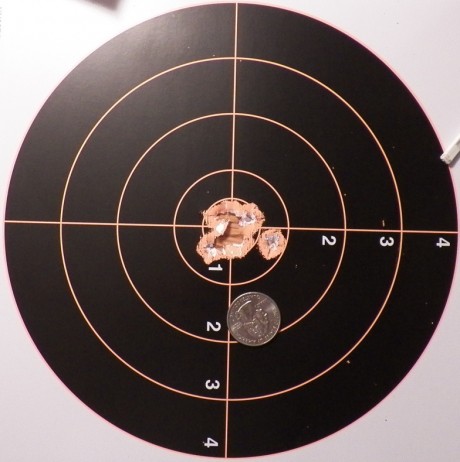
OK, so I have "group" in quotes because I was actually still playing with the scope elevation and windage settings while shooting this.
This is eight pellets. On one pellet I twitched as I pulled the trigger. Well, I probably twitched on all of them, but I twitched enough that I noticed it. That is the "outlier" pellet in the group.
Group size is measured center-to-center so the size of a group is defined as the largest distance between any two pellets' centers. In this case, measuring with the outlier pellet, it's a 1 1/8" group. Measuring without the outlier it's a 7/8" group.
In general a 1" group is considered "lethal". Not great or awesome or anything to really brag about, but "lethal" is good enough for me.
Now, I do think that my next group will be tighter since my last couple of shots in this group were right in the same spot, and right on the center crosshairs. So While I 'sighted it in" roughly on Thursday night, now I've "dialed it in" and feel that at least at 25 yards, I can hit pretty much anything I need to.
Of course now I have to pump up the tank again.... sigh.
So I had an early, early morning meeting this morning so had to go to bed early (I'm working on an international project now and the project lead is in London, so lots of early morning meetings....) So I didn't have time to really put my thoughts down about the new pellet gun.
In case I need to remind you, this is the gun I bought:
It is not cheap. The gun itself is over $500, and with all the other stuff you need, it ended up being pretty close to a grand.
Yes, I know. I am insane. I do this sort of thing about once every five years or so... The Cosmic Wife says my biggest problem is that I have champagne tastes and a beer budget. She's right. When I get interested in something I find it very difficult to accept less than a top of the line item. That's why I own the most expensive 92mm apochromatic refractor telescope in the world...
I tried this time. I really did. I decided that I would go with the "mid-range" option for pellet guns, which is the "break barrel" design and after tons of research and discussion with the "experts" I ended up buying what was supposed to be the best match of accuracy and power in the break barrel arena, but I just couldn't shoot the damn thing straight. Plus the shock wave from the recoil was tearing the gun apart. Literally. Parts were falling off and breaking.
So I decided to go up one level to the PCP realm. Unfortunately that more than doubled the cost.
Oh well.
Forgetting all the irresponsible financial escapades involved, I'd rather just talk about the gun.
I had asked Pyramyd Air to set the gun up for me, something they offered to do at no charge after all the grief I had with the Hatsan models. So it came to me pre-assembled and shipped in my previous gun case. It was also pre-sighted in, but at 10 meters (which is what their in-house shooting range is set for).
But, because the air tank is a Department of Transportation certified high pressure gas container, it has to be shipped empty, so they had vented all the air out before shipping it to me. Meaning I had to spend 90 minutes or so pumping it up. Most of that 90 minutes was me resting between 50 pump sessions so that I didn't do anything stupid like throw my back out. Plus I wasn't in any great hurry and I had expected to have to fill the tank up one pump at a time.
I did manage to get the tank filled up to about 2,600 psi well before sunset though, which was my real goal, so I was able to go outside and shoot it.
I did set it on the lowest setting. This was for a couple of reasons. First, the only really negative comment about these guns that I saw on the boards was that it was supposed to be loud. "As loud as a .22 long rifle, if not louder!" was a pretty common comment on the boards. Shooting at lower power means less of an air shock wave, so less noise. Secondly, shooting at a lower power means you use less air, meaning you get more shots. That is especially attractive to someone who just spent 90 minutes pumping up an air tank. And finally, I am in a residential neighborhood, in spite of it being in a rural town with large, tree-infested yards. So I didn't really want any ricochet that might happen to have any more power than needed.
So at the lowest power I took my first shot. I use a "bullet capturing device" when I target shoot in my back yard. It's basically a box made of thick steel which is designed to contain a .22 long rifle bullet. The back of the box is angled so that the bullets or pellets hit the back and ricochet down into a capture area where the lead is supposed to settle so you can recover it and remold it into new bullets or pellets. (Yeah, I'll probably eventually get to that point...)
So I used a bit of construction paper with a little self-adhesive "bullseye" that is about the size of a small coin. The first shot was a bit off because the trigger was much, much lighter than I expected. So it went a bit right, but was way high, probably three inches high, which is pretty dang high for a 20 yard shot. Plus it made a really loud sound when the pellet hit the steel box. Much louder than the report of the pellet gun itself.
So I dialed down the scope quite a bit and set up a small piece of 3/4" plywood in front of the box, figuring the plywood would either stop the pellet or reduce the speed so much that the "blaanggg!" of the pellet hitting the steel box would not be so loud.
The second shot was just a bit more than an inch high, and made a satisfying "THWOCK!" sound when it hit the wood. That pellet completely penetrated the plywood, but remained embedded in the shattered back side where it came out.
So I dialed down the scope a bit more and took another shot. In all it took me four shots to dial in the scope. I took one more shot to be sure that it was really dialed in, for a total of five shots into the plywood. By then the back of the plywood looked like it had been hit with a grenade or something. Some of the shots had cleanly penetrated the plywood, but a couple had just barely remained in the wood.
Remember, this is on the LOWEST power setting.
Now, I had shot at that same piece of plywood with my Hatsan before sending it back. Keep in mind that the Hatsan 125 is considered one of the, if not THE, most powerful .25 caliber break barrel gun on the market. The pellets from the Hatsan had never penetrated all the way through. They were embedded in the plywood but had barely even made a bulge on the back of the board. So the Condor, on its lowest setting, was already blowing the Hatsan away. And I was using lighter pellets with the Condor too, meaning they delivered less impact at the same muzzle velocity.
The bottom line is that I am very, very pleased with this gun. Right now the only thing I am less than thrilled about is that I have to disassemble the stock and tank to refill the tank. They do sell a tank that has a refill valve that you can refill without undoing the tank. I'll probably end up getting one of those.... They cost about $100 or so... Sigh....
But the gun is sweet. :)
New Air Force Condor "Bounty Hunter" model came in today. Took 90 minutes to pump the tank up to 2,500 psi. Took it outside and put it on its lowest power setting.
Oh. My. God.
Four shots to sight in. Hitting dime-sized bullseye at 20 yards. Trigger is sweet. Scope is great. Shooting through 3/4 inch plywood with .25 caliber pellets.
Sounds like a bomb going off when it hits the wood. Splinters fly, it's just awesome!
I think I'm gonna like this gun.
.... because posting about pellet guns is not remotely as depressing as posting about politics...
So.... some thoughts on accuracy.
I am probably crazy when it comes to accuracy. My expectations are probably totally out of whack with reality. Especially when you consider all the variables that go into shooting a pellet 30 yards or more downfield.
How accurate is "good enough?" Well, for most purposes "good enough" accuracy is defined as "1 inch groups". That's because the "kill spot" on most small game animals is about the size of a 1" diameter circle. Even larger game sometimes have small kill spots too, and obviously more accurate is always better than less accurate. "Aim small, miss small" is a maxim in shooting that has been true since people first started launching sticks into the air with atlatls.
Some people aren't happy with 1" groups though. Particularly at close distances like ten meters (which is an Olympic sport, btw... the US has a 10m pellet gun team competing in London this month). Serious shooters expect to have groups well below 1/4" at ten meters.
Obviously that's not much room for error, considering the following:
1. Pellets are rarely uniform. Even the best commercially available pellets are produced through the use of multiple pellet molds, and as such, even if each batch was molded and de-molded perfectly, there would be differences in weight and size just due to the differences in the different molds. Add in the tendency for cast metal to have flashing, bubbles and other defects and it's amazing that there is any consistency at all. It is not uncommon for the weights of commercial grade pellets to vary by as much as 10%, and the same is true for size.
2. Air pressure is rarely consistent. This is actually a big problem. PCP guns tend to operate at 2,000 - 3,000 psi air pressure. Air reservoirs are not highly sophisticated devices. In fact they are generally nothing but a bottle with a valve on top. The valve is held closed by a spring. When you want to put air into the bottle, you push down on the valve to open the airway and then force air into the bottle until it's full and then you allow the valve to close. To get air out of the bottle you do the same thing. (Some bottles actually have an input and an output valve, but those are more expensive bottles). So the way this works is that you "tap" the valve to open it for a split second, which allows a burst of air to come out before the spring slams the valve shut again. The way most guns do this is with a "hammer" which slams against the valve. The hammer is cocked by compressing a spring and when you pull the trigger the spring is released, the hammer flies down a tube and smacks the valve, the air is released and flows into the breech where it then propels the pellet down the barrel. How much air is released, and how fast, is determined by the speed and weight of the hammer, the distance the valve has to travel, the air pressure inside the tank and the size of the airway in the valve. Each time you hit the tank the air pressure is reduced. Most guns get about 15 to 20 shots before the air pressure in the tank is reduced to the point that accuracy suffers and you have to "top it off" again. One reason I got the AirForce gun is that they use a massive air reservoir which allows for many more shots in the "sweet spot" before you have to pump more air into the tank.
3. All of the things that normal guns have to deal with come into play as well. How is the scope mounted? Is the barrel straight? (No barrel is actually straight, in fact determining the direction of barrel bend is part of the job of gun builders.) The trick is to have the barrel's bend be in line with the scope or barrel sights. Gun barrels are graded the same way fishing rods are, their natural "bend" is marked and the barrel is mounted on the gun with the natural bend set so that the projectile won't "drift" when fired. Other things that come into play are torque, vibration, flexture, etc...
So... considering all of this, how the heck can you shoot accurately?
Well, all of the things in #3 are well known and have solutions that have been in place for firearms for hundreds of years now. So that leaves items #1 and #2.
For #1 serious shooters grade and separate their pellets by weight and size. Yes, they do. Seriously. They use digital scales to weigh each pellet and they use different techniques to separate according to size. Then they put the graded pellets in tins with the weight and size marked on them. Plus they clean the pellets, removing all flash, discarding all malformed or incomplete pellets and they even wash them and in some cases lubricate them. (Some shooters believe lubricated pellets gain up to 10% more velocity than un-lubricated pellets).
For #2 the only real solution is what is called a "regulator." Yes, that's the same thing that scuba tanks use, and it serves the same purpose. A regulator changes the outgoing pressure of a tank from whatever the internal pressure is to a consistent pressure. Usually the regulators in use are set to 2,600 psi or something like that. A good regulator will allow the gun to have nearly identical air pressure and air volume shot after shot until the internal pressure drops below what the regulator is set at.
Regulators ain't cheap. A decent one can cost well over $200. But serious shooters use them. Most shooters who use regulators also use 4,500 psi tanks, which are usually carbon-fiber and very costly, but they provide a lot more shots.
Really, REALLY serious shooters use what is called a "tethered" system. Instead of using a portable air reservoir bottle, they have a huge scuba tank and a regulator and run a long tube from the scuba tank to the gun. This allows thousands of shots at the same pressure before the scuba tank needs to be refilled.
So... am I gonna grade my pellets? Am I gonna buy a regulator?
Dunno. Let me see how the gun works first. But if I ever get really serious about this... mebbe so.
So... high end pellet guns sell for up to $5,000.
I have an idea that I think would produce a pellet gun of such superior accuracy and consistency that it should be eagerly sought after by pellet gun enthusiasts and could easily sell for $3,000 or more.
I don't think it's a difficult engineering challenge either. It's just something that nobody seems to have put together all the elements of.
If I had a machine shop, I could build a prototype in a week or so.
What's the best way to see if this could be a money making idea?
Yeah, I know the answer is "PATENT IT!" I am looking into that now.
Assuming I do pursue a patent, what's the best way to build a prototype?
Sigh....
This whole episode should be some sort of life lesson.... I suppose it is, but much like Calvin from the "Calvin and Hobbes" strip, my mantra in life sometimes seems to be "Live and don't learn."
So, I sent the Hatsan back.
Remember, I originally purchased the Hatsan because it was the most powerful (and supposedly most accurate) break barrel pellet gun on the market. Although I never saw the accuracy, I can attest to the power. That gun was a monster. It would punch a .25 caliber round-headed pellet through 1/2 inch plywood with ease, and about one out of four shots into 3/4" plywood also penetrated. I have no doubt the gun could kill a deer, much less a skunk. In .25 caliber it supposedly delivered up to 40+ foot pounds of energy on impact, which is about half 1/4 of a typical .22 long rifle bullet. It is technically not considered "lethal" according to the standard measure of "lethal" firearm, but I wouldn't want to take a pellet from the gun.
But my experience with the gun has been totally negative. So much so, in fact, that it has put me off break-barrel designs entirely.
The unfortunate aspect of this is that the pellet rifle world is divided into four basic categories:
1. Pump pneumatic guns. These are guns you pump up with repeated pumping actions building up air pressure in a reservoir which is released when you pull the trigger. The advantage of pump pneumatic guns is that when you shoot the gun, there is negligible recoil. The disadvantages are that you can't really design a gun that you can pump up easily to deliver any sort of real power. They have a practical limit based on how much you can pump into the reservoir each pump, and how many pumps you can make. Typically ten pumps is considered to be the max that a shooter will tolerate to get full power. Also the power of these guns tends to be highly variable and therefore the muzzle velocity of the pellets tend to be unpredictable. This is because it is hard to get every pump to be the same. So for the most part pump pneumatic pellet rifles are restricted to backyard plinking duty. They aren't considered suitable for "ethical hunting" and they typically aren't consistent enough to be used for serious target shooting. Pump pneumatic guns can be quite cheap. Some quality guns sell for less than $100.
2. Break barrel guns. These now come in two flavors. Steel spring and gas piston. The Hatsan was a steel spring. The advantage of the break barrel gun is that you can generate some serious energy storage from a single pump of the barrel because the energy is stored in a spring or a gas piston instead of increasing the air pressure of an air reservoir. Upon pulling the trigger the spring or gas piston decompresses violently, driving a large piston down an airtight tube to generate a sudden burst of air pressure which propels the pellet. The disadvantage of these guns is that the violent energy release tends to cause the guns to be difficult to shoot with accuracy, requiring a high degree of skill in holding the gun in exactly the same manner for every single shot. The violent energy release tends to travel throughout the gun loosening bolts, changing the scope alignment and just generally wreaking havoc with the gun to the point that maintaining the guns can be a pain. This is why I eventually soured on the design. However, these guns do provide enough energy that if you CAN shoot them accurately, you can reliably take down prey of up to raccoon or even coyote size. Which is why I thought it would be perfect for a skunk. Break barrel guns vary in price according to quality. You can get some .177 caliber basic models for $100, but decent quality guns with any real power tend to be in the $300 - $600 range.
3. CO2 cartridge guns. These guns are similar to the pump pneumatic guns. The limitations of CO2 as a power source are quite severe. CO2 cartridges work by exploiting the volatility of liquid CO2. Basically as long as you have enough CO2 in the cartridge that the pressure keeps some of it in liquid state, the CO2 pressure in the cartridge remains constant. When you fill up a CO2 cartridge the pressure inside the cartridge increases until it reaches the point that the gas liquifies, then adding more CO2 essentially doesn't change the pressure, it just makes more liquid CO2. In reverse this means that the cartridge will deliver more or less exactly the same amount of gas pressure per shot until the liquid is gone, at which point you might get one more shot before it becomes exhausted. The problem with CO2 guns is that the pressure inside the cartridge at which the liquid becomes gas and vice versa is highly dependent on the temperature. At 100 degrees you might get 2,000 psi pressure inside the cartridge, which will send a pellet on its way at a respectable velocity (but still somewhat less than a break barrel or PCP gun can achieve). But when you get down to, say, 50 degrees, you might be getting only half that pressure, and at really cold temperatures the gun becomes unusable. So since most hunting occurs in the fall or winter, CO2 guns tend to be reserved for backyard plinking and general tomfoolery. CO2 guns are probably the cheapest pellet rifles in general since they have few moving parts and don't have to be made to high levels of quality or use high quality materials. So $50 might get you a decent CO2 rifle.
4. Pre-charged pneumatic guns. These are the the real deal. They have all the power (and more) of the break barrel guns with all of the advantages of the CO2 or pump pneumatic guns. They have negligible recoil. They have fixed barrels. They have relatively few moving parts. The disadvantage of the PCP guns are primarily in two areas. First they tend to operate at around 3,000 psi, which is scuba tank territory and requires very high quality construction and high quality materials to avoid catastrophic tank or barrel failure. This really drives up the price. But besides that, they require some means of charging the gun before you can shoot it. Those of you who have filled up a bicycle tire with a hand pump understand what a pain it is to hand-pump an air reservoir. But bicycle tires tend to be fully inflated at about 45 psi. These guns require 3,000+ psi. Air pumps that can handle that much pressure are specialty items. You can't find one at your local Walmart. And they ain't cheap. A decent quality 3,000 psi air pump that can charge a PCP air rifle costs $200 - $350, depending on the quality. The good ones have moisture filters because if you pump moist air into the reservoir, when you shoot the gun, the moisture will condense immediately due to the drop in pressure. That means your gun innards will get wet, but it also means that your air pressure will drop slightly due to the condensation of the water, which means you'll lose a bit of power. So you want DRY air. As it happens, that's also what scuba tanks require, so it is common practice to charge these guns using scuba gear. But that's not cheap either. First you need an adapter so that the scuba tank filler can fill the gun, second you need a scuba dealer who will fill your gun and third you need to pay the scuba dealer for the service of filling your gun. Or you can just buy a fully charged scuba tank and fill your gun from that, but each time you fill your gun you'll bleed off some pressure from the tank and eventually you'll have to top off the scuba tank again to keep the pressure in the gun at the required level. PCP guns tend to run from about $400 to well over $2,000.
So you can guess what I am now wanting...
The best deal I can find so far in terms of power, accuracy and overall cost is the AirForce Condor pellet gun platform. The basic .25 caliber model costs roughly $650 for the gun and the PCP tank. But that tank has to be charged before you can use the gun. A hand pump costs a minimum of $200. The scuba tank adapter costs roughly $100. Since there aren't many scuba dealers in my neck of the woods, I would have to go with the hand pump. So the "bare bones" model is essentially $850. Plus tax. Free shipping though.
Now, I do have a trade in of $300 from the Hatsan I am sending back, so that means it's really about $550 out of pocket.
But that's freaking CRAZY! I can buy a pretty dang nice 30.06 rifle for that much money.
Oh, and I need a scope too. So another $50 - $75 on top of that....
Sheesh..
The hell of it is that I have probably already decided to buy the thing. Now it's just figuring out how to justify it internally.
So, after spending an hour getting ready for a canoe outing, the Cosmic Daughter got sick and had to see the doctor. By the time the Cosmic Wife was back, it was hailing. The next three hours were thunderstorms.
By the time the weather finally cleared up, it was really too late to drive 90 minutes to a reasonably sized lake.
So I took the canoe off the car, put everything back up and we'll have to try again later this week. I can't go canoeing tomorrow, I already have plans.
However, during the rain delay I did do some more research and design for the canoe outrigger system. And I found probably the single key piece of hardware that will make it all work.
I had been really struggling with how to attach the finished outriggers to the canoe. I didn't want to drill holes in the side or gunwales, and my canoe doesn't have the high crossbars that some smaller canoes have that seem perfect for attaching stuff. So figuring out how to clamp a square tube at 90 degrees from the gunwales seemed an intractable problem. Until I discovered this nifty little hardware item:
It's called a "beam clamp" and it is actually designed explicitly for the purpose of clamping a pipe onto the edge of a beam when you have very little overlap to work with. It's exactly what the commercial outrigger systems use. They cost about $4 each, so four of them would be $16 or so.
Also I discovered some metal flag pole holders that can be set at different angles.
And I also found some "crab pot floats" that are used for crabbing that might be ideal for the floats.
They cost about $9 each. Each one is about six inches in diameter and about 14 inches long. They may not be buoyant enough though. But the bigger ones are more expensive.
 Seriously, I am sometimes amazed by how clever humans are.
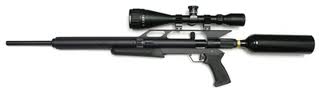 It is not cheap. The gun itself is over $500, and with all the other stuff you need, it ended up being pretty close to a grand.
Yes, I know. I am insane. I do this sort of thing about once every five years or so... The Cosmic Wife says my biggest problem is that I have champagne tastes and a beer budget. She's right. When I get interested in something I find it very difficult to accept less than a top of the line item. That's why I own the most expensive 92mm apochromatic refractor telescope in the world...
I tried this time. I really did. I decided that I would go with the "mid-range" option for pellet guns, which is the "break barrel" design and after tons of research and discussion with the "experts" I ended up buying what was supposed to be the best match of accuracy and power in the break barrel arena, but I just couldn't shoot the damn thing straight. Plus the shock wave from the recoil was tearing the gun apart. Literally. Parts were falling off and breaking.
So I decided to go up one level to the PCP realm. Unfortunately that more than doubled the cost.
Oh well.
Forgetting all the irresponsible financial escapades involved, I'd rather just talk about the gun.
I had asked Pyramyd Air to set the gun up for me, something they offered to do at no charge after all the grief I had with the Hatsan models. So it came to me pre-assembled and shipped in my previous gun case. It was also pre-sighted in, but at 10 meters (which is what their in-house shooting range is set for).
But, because the air tank is a Department of Transportation certified high pressure gas container, it has to be shipped empty, so they had vented all the air out before shipping it to me. Meaning I had to spend 90 minutes or so pumping it up. Most of that 90 minutes was me resting between 50 pump sessions so that I didn't do anything stupid like throw my back out. Plus I wasn't in any great hurry and I had expected to have to fill the tank up one pump at a time.
I did manage to get the tank filled up to about 2,600 psi well before sunset though, which was my real goal, so I was able to go outside and shoot it.
I did set it on the lowest setting. This was for a couple of reasons. First, the only really negative comment about these guns that I saw on the boards was that it was supposed to be loud. "As loud as a .22 long rifle, if not louder!" was a pretty common comment on the boards. Shooting at lower power means less of an air shock wave, so less noise. Secondly, shooting at a lower power means you use less air, meaning you get more shots. That is especially attractive to someone who just spent 90 minutes pumping up an air tank. And finally, I am in a residential neighborhood, in spite of it being in a rural town with large, tree-infested yards. So I didn't really want any ricochet that might happen to have any more power than needed.
So at the lowest power I took my first shot. I use a "bullet capturing device" when I target shoot in my back yard. It's basically a box made of thick steel which is designed to contain a .22 long rifle bullet. The back of the box is angled so that the bullets or pellets hit the back and ricochet down into a capture area where the lead is supposed to settle so you can recover it and remold it into new bullets or pellets. (Yeah, I'll probably eventually get to that point...)
So I used a bit of construction paper with a little self-adhesive "bullseye" that is about the size of a small coin. The first shot was a bit off because the trigger was much, much lighter than I expected. So it went a bit right, but was way high, probably three inches high, which is pretty dang high for a 20 yard shot. Plus it made a really loud sound when the pellet hit the steel box. Much louder than the report of the pellet gun itself.
So I dialed down the scope quite a bit and set up a small piece of 3/4" plywood in front of the box, figuring the plywood would either stop the pellet or reduce the speed so much that the "blaanggg!" of the pellet hitting the steel box would not be so loud.
The second shot was just a bit more than an inch high, and made a satisfying "THWOCK!" sound when it hit the wood. That pellet completely penetrated the plywood, but remained embedded in the shattered back side where it came out.
So I dialed down the scope a bit more and took another shot. In all it took me four shots to dial in the scope. I took one more shot to be sure that it was really dialed in, for a total of five shots into the plywood. By then the back of the plywood looked like it had been hit with a grenade or something. Some of the shots had cleanly penetrated the plywood, but a couple had just barely remained in the wood.
Remember, this is on the LOWEST power setting.
Now, I had shot at that same piece of plywood with my Hatsan before sending it back. Keep in mind that the Hatsan 125 is considered one of the, if not THE, most powerful .25 caliber break barrel gun on the market. The pellets from the Hatsan had never penetrated all the way through. They were embedded in the plywood but had barely even made a bulge on the back of the board. So the Condor, on its lowest setting, was already blowing the Hatsan away. And I was using lighter pellets with the Condor too, meaning they delivered less impact at the same muzzle velocity.
The bottom line is that I am very, very pleased with this gun. Right now the only thing I am less than thrilled about is that I have to disassemble the stock and tank to refill the tank. They do sell a tank that has a refill valve that you can refill without undoing the tank. I'll probably end up getting one of those.... They cost about $100 or so... Sigh....
But the gun is sweet. :)
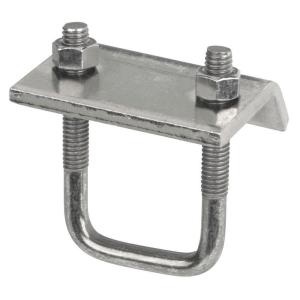 It's called a "beam clamp" and it is actually designed explicitly for the purpose of clamping a pipe onto the edge of a beam when you have very little overlap to work with. It's exactly what the commercial outrigger systems use. They cost about $4 each, so four of them would be $16 or so.
Also I discovered some metal flag pole holders that can be set at different angles.
And I also found some "crab pot floats" that are used for crabbing that might be ideal for the floats.
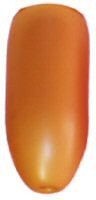 They cost about $9 each. Each one is about six inches in diameter and about 14 inches long. They may not be buoyant enough though. But the bigger ones are more expensive.